My colleague Melanie’s pick last week about Swiss supermarket chain Coop using AI-supported video surveillance in its stores for security purposes reminded me of the recent revelation that American supermarket chain Kroger may be engaging in surveillance pricing, i.e., using algorithms and data collected on customers (including through facial recognition technology) to determine the highest (…)
I find China’s attempt to treat data as a formal business asset quite interesting, especially given the massive amount of data the country generates. Companies seem reluctant to adopt this policy though, with only 283 out of 60 million companies participating. But it is still early days, and the months and years to come will (…)
Nobody would seriously argue that a chat bot can replace school counselors in helping pupils taking their first steps on their career paths. However, in the face of a shortage of counselors, aren’t chat bots better than no guidance at all? I like this article for its nuanced discussion of young people relying on specialized (…)
Undersea telecommunication cables are an invisible but integral part of the central nervous system of our digital society. With digitalization encroaching on ever more parts of our day-to-day lives, we become ever more dependent on telecommunication infrastructure. All the more worrying is the string of ‘incidents’ involving the undersea cables in recent years, many of (…)
With physical media, no one can reach into your home and remove what you bought from your shelf.’ Not only can Amazon delete books remotely, the shift towards cloud-based storage for e-books means that copies can be modified by Amazon and publishers at will. With the rapid pace of change in the political environment, it (…)
Bien que la tech du Silicon Valley se plaint toujours de la régulation, je pense que l’état actuel des choses est bien en leur faveur. Laisser ces réseaux dicter la narration, qui est suivie par la plus grande partie de la population, a déjà passablement érodé la confiance dans les organisation étatiques. Vu que les (…)
The article reports that the US may have paused its offensive cyber operations against Russia, suggesting it is likely part of a broader diplomatic strategy to encourage talks over the Ukraine conflict, or to possibly focus more on addressing cyber threats posed by China. Scaling back offensive actions without reciprocal guarantees risks exposing critical infrastructure (…)
‘Quantum computing applications may become practical within the next 5 years’, according to recent claims by Microsoft and Google, both of which released statements within days of each other. The fact that these two rival tech giants made the same prediction at the same time lends credibility to the statement, especially given the ongoing global (…)

What started as a small-scale hacking contest in 2008, has now become one of the largest cybersecurity events in Switzerland and neighboring Europe, as well as one of the largest on-site CTF’s worldwide gathering a wide spectrum of cybersecurity professionals and enthusiasts from all over the globe.
Eye of the Cyber – Create Tomorrow. With the new motto, the Swiss Cyber Security Days is addressing the urgency of actively and courageously shaping the digital future. The focus is on the challenges of cyberspace and the potential of new technologies.

EPFL has set up a Mastodon server for the School community, allowing members to post and share content in a way that’s aligned with the values of open science. We opted for Mastodon because independence and effective communication tools are critical.

Matrix is a widely used open source chat platform. It is an alternative to platforms such as Slack and MSTeams. In line with C4DT’s objective to promote services in the realm of digital trust, we set up our own Matrix instance and migrated our professional communications there in 2019. A privacy-first approach with encrypted chat (…)
Donald Trump’s new Department of Government Efficiency, led by Elon Musk, is set to transform the US Digital Service into the US DOGE Service, ostensibly to modernize federal technology. However, there are indications that the true focus is on cost-cutting and workforce reduction, as evidenced by executive orders mandating a government-wide hiring freeze and allowing (…)
UBS has completed a proof-of-concept (PoC) for its ‘UBS Key4 Gold’ offering on the Ethereum layer-2 network, zkSync. I liked UBS’s step-by-step progress toward adopting blockchain technologies. Initially, the company implemented its private blockchain network, leveraging the inherent traceability of blockchain. Now, with this PoC, UBS is seeking scalability by deploying its ‘UBS Key4 Gold’ (…)
Interesting work from OpenAI, who are testing how good their models are at convincing people to change their minds. Currently, they’re running the tests only internally on pre-selected human testers. But who knows where this will eventually be used, and whether in the open or hidden? For that matter, what about the LLM-generated messages Meta (…)
The new laws targeting AI-generated CSAM position the UK as the first nation to criminalize the possession, creation, or distribution of AI tools used for generating such material, imposing penalties of up to five years in prison. These measures also prohibit related manuals, penalize those operating websites that share CSAM, and grant Border Force the (…)
I never get tired of yet another story about hacking into connected cars. This time it’s Subaru! Their ‘STARLINK’ system (nothing to do with the satellites) allowed anybody to start, stop, lock, or unlock a car from a distance (among other things). Funny side note: the author, a security researcher, bought the car for his (…)
We’ve been having a lot of discussion about the ‘Swiss Government Cloud,’ which is effectively hosted in the USA and China. The EU has the same setup, but someone – likely in the Trump administration – is now attempting to put holes in it by removing parts of the privacy guarantees its remote cloud has. (…)
DeepSeek, a new Chinese open-source LLM that uses limited resources—particularly older Nvidia chip models—extremely efficiently, has exploded onto the AI tech scene almost overnight. Many are calling this a new ‘Sputnik moment’ for the US. Already the most downloaded free app on the US Apple Store, DeepSeek is expected to challenge the oversized investment bubble (…)

AI has the potential to revolutionize also software development and IT in general. To explore the implications of AI on these domains, we organize a by-invitation-only roundtable discussion. The objective of this roundtable is to gather insights from visionaries and experts to understand the impact of AI on the entire SDLC, beyond technical aspects and coding. We aim to explore how AI can contribute to more productive, higher quality, and successful IT projects while mitigating potential risks and challenges that may arise in the integration of AI into the SDLC.
This event is organized by C4DT in collaboration with ELCA.
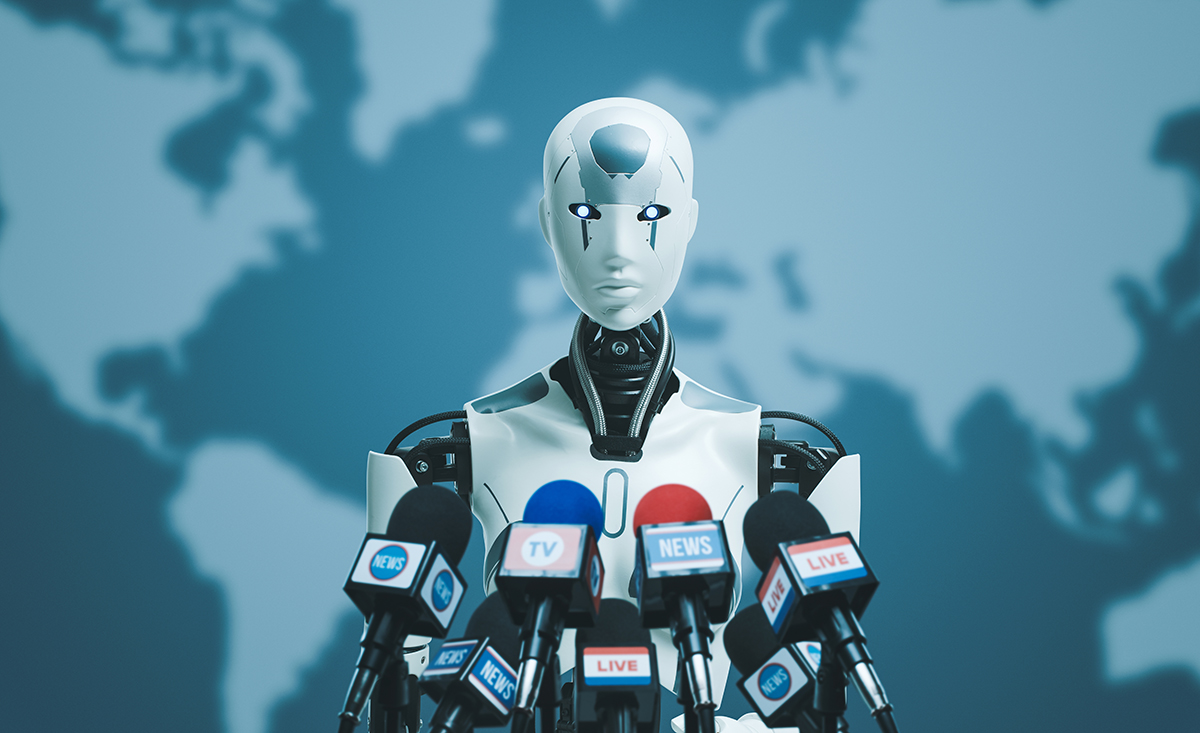
Friday, February 7th, 2025, 14h-17h, BC 410, EPFL Introduction Artificial Intelligence has the potential to revolutionize also software development and IT in general. To explore the implications of AI on these domains, we organize a roundtable discussion. The objective of this roundtable is to gather insights from visionaries and experts to understand the impact of (…)
I find this article interesting because it reveals how popular apps are being used to collect personal location data through real-time bidding (RTB), all without the knowledge of the app developers. The hacked Gravy Analytics files prove how apps, even those that are supposed to be private, can accidentally become part of this data supply (…)
I’m quite surprised that even Apple cannot get rid of LLMs hallucinations in its products. And I always thought that one of the best parts of LLMs are the summaries they produce. So for the moment it seems like a good idea to wait some more for the AI revolution.
Here is an article, in Cory Doctorow’s signature style, discussing social networks and what drives them and what makes people leave or stay. I like specifically how he dissects the way the once-good services these platforms used to provide got untethered from the profits their creators and CEOs were chasing over the years. Towards the (…)