Agentic AI has only recently emerged, yet it is already being used to commit fraud. This trend is not new; historically, fraudsters have exploited new technologies to target unsuspecting users and weak security systems, as seen with the first instances of voice phishing during the rise of telephony in the early 20th-century. These challenges have (…)
This policy paper highlights the crucial trade-off between privacy and utility in data sharing and call for a shift from technology-centric solutions to purpose-driven policies. The paper formulates eight actionable recommendations to guide realistic, privacy-preserving data-sharing practices in Europe.

Join the movement! Swiss {ai} Weeks calls on researchers, developers, businesses, and citizens to come together and build the future of AI — hands-on, ethical, and open. This isn’t just exploration, it’s collaboration in action.
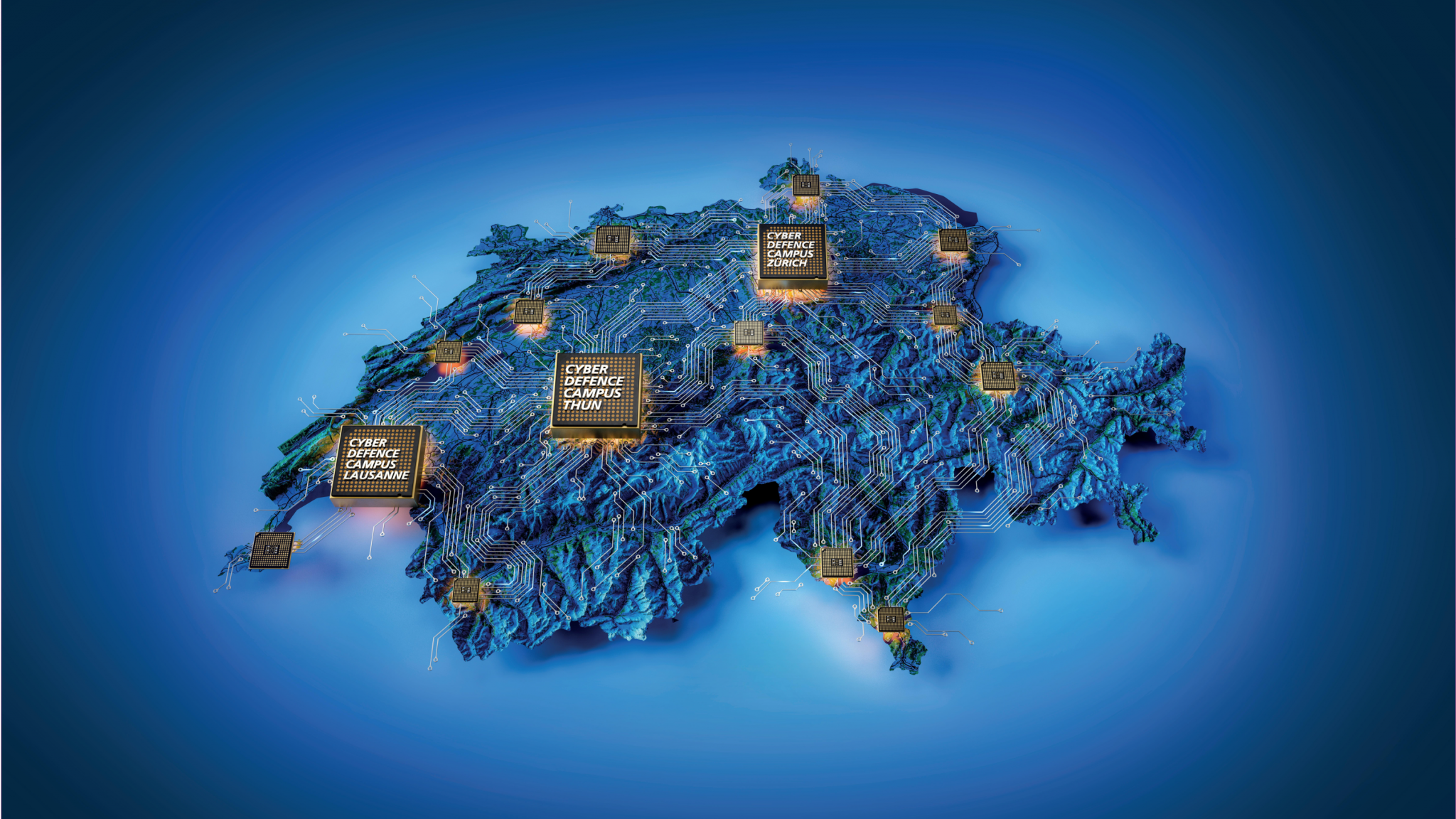
To promote research and education in cyber-defence, the EPFL and the Cyber-Defence (CYD) Campus have jointly launched the “CYD Fellowships – A Talent Program for Cyber-Defence Research.”
The 12th call for applications is now open, with a rolling call for Master Thesis Fellowship applications and Proof of Concept Fellowship applications, and with a deadline of 20 August 2025 (17:00 CEST) for Doctoral and Distinguished Postdoctoral Fellowship applications.
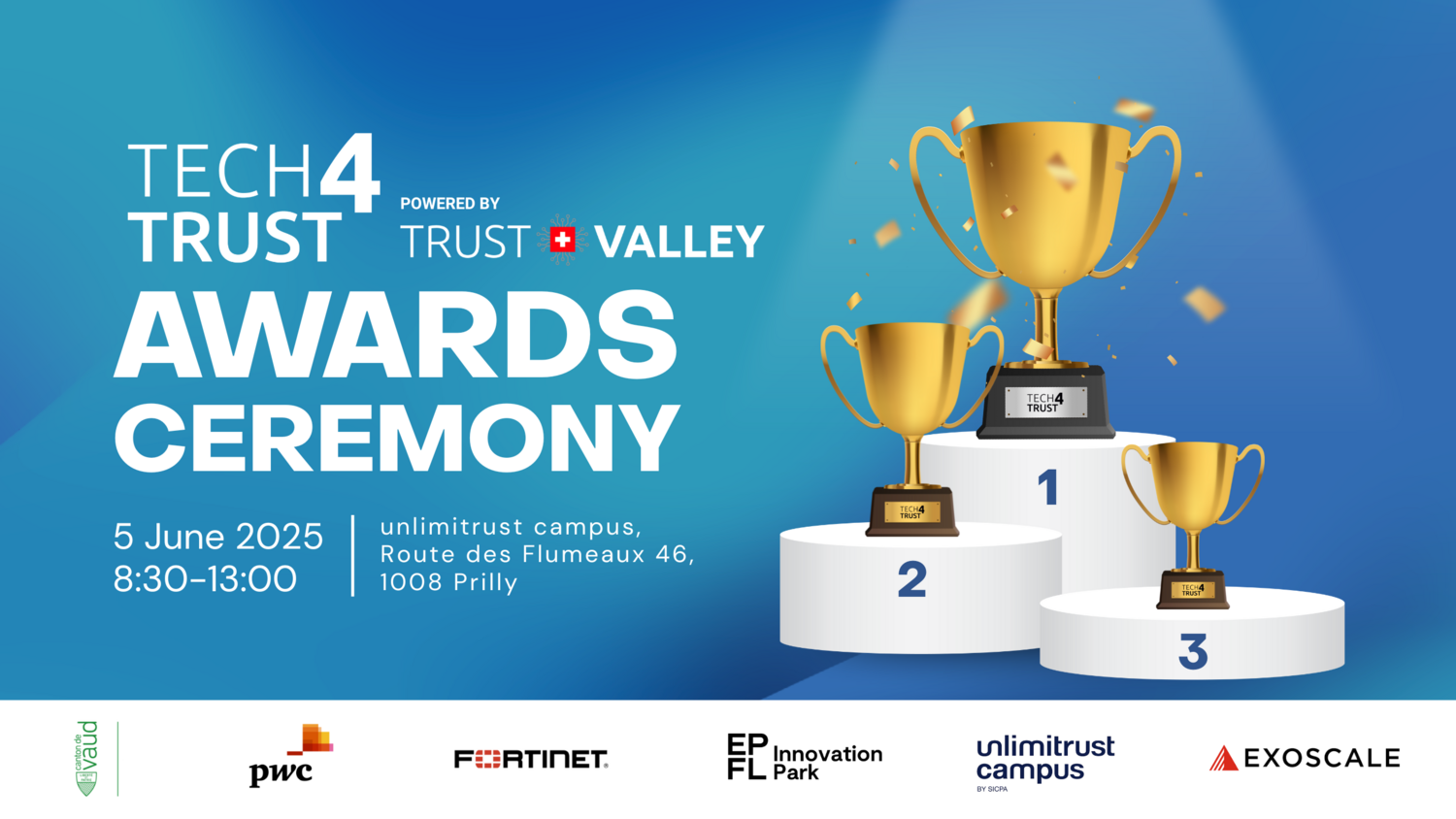
Join us for the Tech4Trust Season 6 Awards Ceremony, celebrating excellence in cybersecurity and digital trust startups. This high-level event brings together corporate decision-makers, investors, and Switzerland’s most innovative startups for a day of recognition, insights, and networking. 🏆🎉 Sponsored by our strategic partners Canton of Vaud, PwC Switzerland, Fortinet, Unlimitrust Campus, and Exoscale.

Being the head of the Natural Language Processing Laboratory at EPFL, Antoine Bosselut keeps a close eye on the development of generative artificial intelligence tools such as ChatGPT. He looks back at their evolution over the past two years and suggests some avenues for the future.
In this paper, the authors highlight the crucial trade-off between privacy and utility in data sharing and call for a shift from technology-centric solutions to purpose-driven policies. The paper formulates eight actionable recommendations to guide realistic, privacy-preserving data-sharing practices in Europe.
Although this article only lightly touches upon the broader implications of connected devices and Big Tech’s access to personal information, it vividly illustrates how data of our daily lives accumulate over time, using the example of a family and their home smart speaker.
ENISA’s new vulnerability database is a significant development in the pursuit of European digital sovereignty. It reduces reliance on US-dominated resources and could lead to better alignment with EU regulations, such as the GDPR and the NIS2 Directive. However, key questions remain about coordination with existing global databases, disclosure policies, and the participation of non-EU (…)

Switzerland’s digital identity (eID) system is ready, and a public referendum on the new law is scheduled for 28th of September 2025. C4DT started working on the recently awarded Innosuisse grant to research privacy-preserving technologies for the eID. We’ll present our first findings, as well as the current Swiyu test environment during our upcoming hands-on (…)
The new bill shifts Japan’s strategy from defensive cybersecurity to active threat disruption, similar to approaches in other countries like the U.S. However, it uniquely empowers military and law enforcement to take preemptive actions, including deploying ‘cyber harm prevention officers’ to disrupt enemy servers without explicit oversight during critical incidents, raising concerns about potential ‘vigilante (…)
Dieser Artikel stellt die Arbeit der Initiative Data4Mods vor – eine Kooperation zwischen der African Content Moderators’ Union (ACMU) und der schweizerischen NGO personaldata.io, deren Ziel es ist, die Verflechtungen in den Arbeitsbeziehungen im Bereich Contentmoderation und Datenarbeit offen zu legen. Die Abwicklung über Dienstleister, die Outsourcing-Zentren in Ländern auf dem afrikanischen Kontinent betreiben, verschleiert die Rolle der (…)
Don’t mess with Texas! This settlement, along with the $1.4 billion agreement Meta reached with Texas last year over privacy violations, will hopefully disincentivize companies from engaging in similar practices. While Google doesn’t admit to any wrongdoing with this settlement, it’s still a significant win for data privacy advocates.
Companies are taking advantage of the digital world to keep control over physical devices, even after you buy them. The latest licensing terms of the Nintendo Switch 2 contains wording that allows the company to permanently disable the console if it determines you’ve violated their terms. This highlights a serious trust concern: even after paying (…)
The NSCS has released an excellent overview of advanced cryptographic techniques and their potential applications. It wisely points out that while these new methods (e.g., homomorphic encryption, multiparty computation or zero-knowledge proofs) provide unique data-processing functionalities to solve certain privacy and trust problems, they come with significant trade-offs in performance, complexity and maturity. To guide (…)

The Research Institute (SuRI) is an annual event that takes place at the School of Computer and Communication Sciences of the École polytechnique fédérale de Lausanne, Switzerland. The workshop brings together researchers and experts from academia and industry for research talks and informal discussions.
Interested in this training? Reach out to us to discuss Teaser Step into the future of digital identity with our immersive training, “SWIYU Integration – Privacy-Preserving Solutions for the Swiss eID.”Tailored for engineers, this course provides a comprehensive exploration of the Swiss eID system, offering an in-depth understanding of its authentication protocols, security measures, and (…)
I like this insight into how a cybersecurity company works to defend against adversaries trying to infiltrate them. According to this article, one of the most important attack vectors is job applicants who want to infiltrate the company. Which of course makes sense, now that other attacks become more difficult, going back to the good (…)
Large language models (LLMs) are trained on huge amounts of data, but companies rarely explain exactly what data they use. This makes it hard to trust these models, since bad data can lead to wrong answers. There’s also a legal problem: Is it allowed to use free online content (like books or articles) for training, (…)
This article reveals how North Korean agents are finding jobs in IT by exploiting remote working opportunities and AI-powered interviews. This combination of espionage and “legitimate” job hunting creates a worrying new security challenge, as companies cannot verify who they are actually hiring. This sophisticated operation illustrates the evolution of cybersecurity threats, which are no (…)
I don’t mind if my AI keeps a memory of my inquiries during a given application session; in fact, it is more convenient if I work on something consecutively. However, long-term memory functions are very disconcerting. In the case of Meta, I am also troubled that it requires a Meta-associated account for its AI use, (…)
Regulations are only effective when properly enforced. Following the introduction of numerous digital regulations in recent years, it is now high time to focus on their effective implementation and enforcement. The Digital Markets Act (DMA) seeks to promote fair competition by protecting smaller businesses from potential abuses by dominant market players. However, its enforcement will (…)

Aiming to provide detailed knowledge and hands-on experience, the participants of the CYRENZH Summer School 2025 are going to understand in-depth and apply interdisciplinary research methods (e.g. mixed-methods approaches, the use of AI in research) from the field of Social Sciences, but also with inputs from Computer Science. Further, this summer school is supplemented with an emphasis on transdisciplinary topics such as communication skills, ethical considerations, and collaborations with industry.

November 19th, 2025, 09h30-17h30, Starling Hotel, 1025 Saint-Sulpice Introduction As we enter the agentic era, AI agents are increasingly integrated into various aspects of modern life, performing tasks that range from personal assistance and financial management to complex decision-making in industries. These AI agents, driven by powerful algorithms, are transforming how we interact with technology (…)