I really like this report and its accompanying FAQ for non-technical readers. Citizen Lab is of course a defender for human rights and freedom of expression, but in this article, they don’t rail on about how China’s weak data protection ecosystem impinges on people’s right to privacy. They just do the technical legwork and let (…)
Not sure if you heard of the latest misinterpretation of a paper describing an attack on symmetric encryption using quantum computers. It has been hyped by some journals as ‘the end of encryption’. But it is at best a demonstration that future quantum computers might be as fast as classical computers. For hacking a very (…)
Artificial intelligence, machine learning, signal processing, multimodal intelligent systems
The razor-thin victory for E.U. supports in Moldova is an uneasy one with the heavy Russian influence campaign on social media in the back of everyone’s mind. Platforms like Meta have repeatedly demonstrated their inability to effectively tackle influence campaigns, no matter their target or scale. With the U.S. election just days away, American democracy (…)
The leaked internal TikTok documents confirm the long-held suspicion that we urgently need to stop entrusting social media companies with putting up safety-rails. Dampening addictive features, bursting filter bubbles and moderating content directly contradicts maximising user engagement, the metric by which such companies live and die. We need binding regulations with real teeth to protect (…)

We’re thrilled to share the success of our recent hands-on workshop on crafting more privacy-preserving E-IDs! In the morning, Imad Aad from C4DT set the stage with an insightful overview of the importance of E-IDs and the essentials for ensuring their effectiveness. The afternoon sessions, led by Linus Gasser and Ahmed Elghareeb, were a deep dive (…)
Anthropic’s CEO, Dario Amodei, is one of today’s leading figures in AI. In his essay, he envisions a future where powerful AI could radically improve human life by accelerating progress in areas such as biology, mental health, economic development, and governance. He foresees a more equitable and prosperous world resulting from these advancements. I particularly (…)
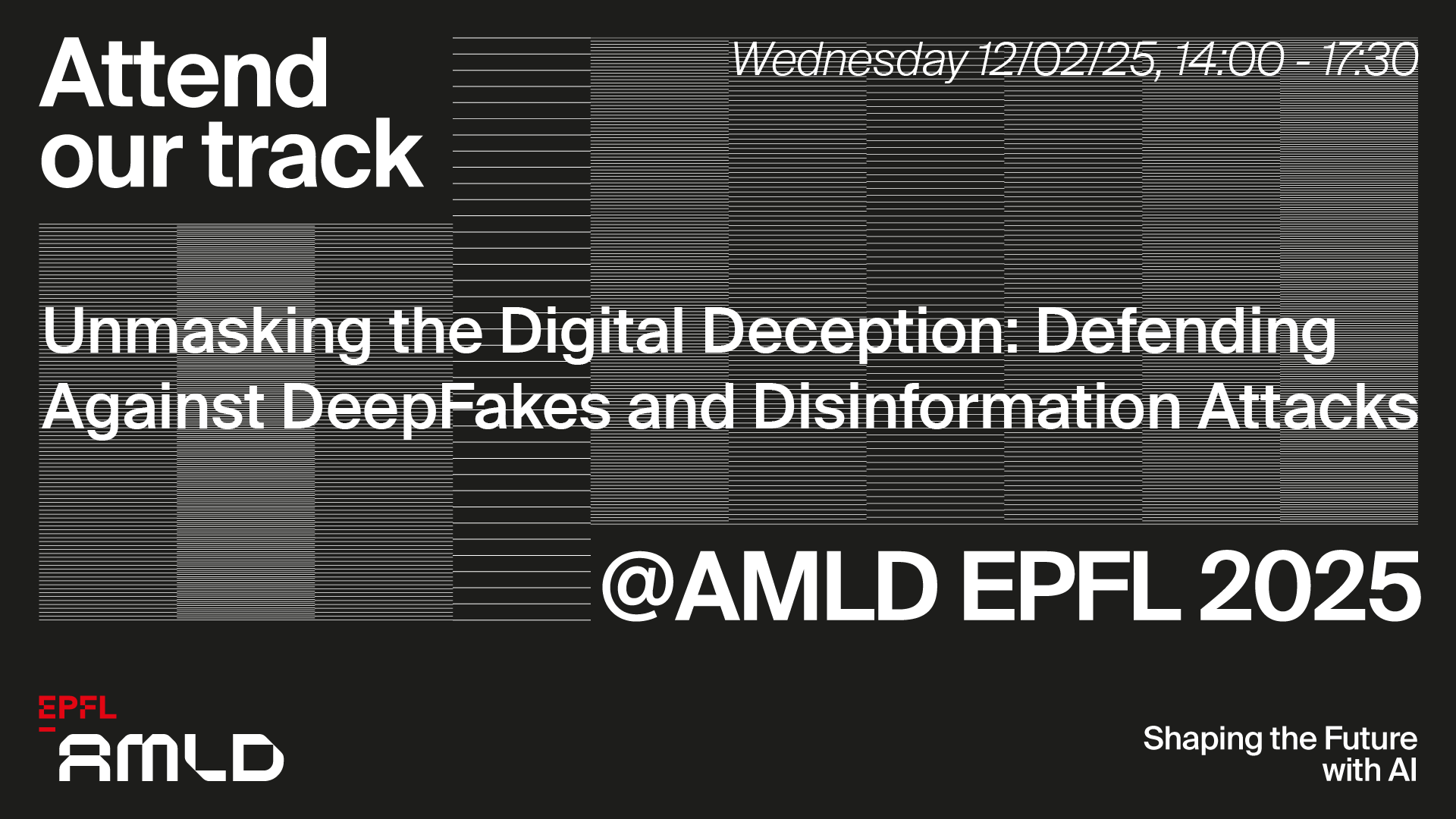
The increasing prevalence of deepfakes and disinformation calls for proactive measures to tackle the associated cybersecurity threats. This track, entitled “Unmasking the Digital Deception: Defending Against DeepFakes and Disinformation Attacks”, is organized by the C4DT and addresses the urgent need to raise awareness, share best practices, and enhance skills in detecting and preventing cyberattacks induced through deepfakes. By participating in this track, individuals and organizations can strengthen their cybersecurity defenses, protect their reputation, and contribute to a safer digital environment.

The integration of AI into the SDLC has the potential to revolutionize software development by automating tasks, improving efficiency, and enhancing decision-making. However, it also introduces risks and challenges that need to be addressed. This track, entitled “AI-Driven Software Development: Transforming the Life Cycle with Intelligent Automation”, is organized by the C4DT and is motivated by the need to explore the transformative potential of AI in the SDLC while ensuring responsible and ethical use. By understanding the advantages, risks, and best practices, participants can harness the power of AI to drive innovation, improve software quality, and optimize development processes.

📣 New Publication Alert! 📣
📽️ The recordings of the October 1st Conference on “Deepfakes, Distrust and Disinformation: The Impact of AI on Elections and Public Perception” are now accessible here

One of our jobs at the C4DT Factory is to work on promising projects from our affiliated labs. This helps the faculties translate their research into formats accessible to different audiences. For a newly on-boarded project, we evaluate its current state and identify the required steps towards a final product. We may then also (…)
Social networks began by enabling us to connect online with our family and friends and with communities of interest. Influencers then helped generate the growth that was “missing” on the personal side. AI-generated content, which Mark Zuckerberg sees as the next “logical jump” in the engagement race, seems very creepy to me if you consider (…)
[DE] “Ein sehr empfehlenswerter Überblicksartikel über laufende EU-Verfahren gegen Meta. Als wären dies allein nicht schon genug negative Presse, enthält der Beitrag eine besorgniserregende Beobachtung: Meta scheint sich offenbar das Recht vorzubehalten Beiträge zu zensieren die die Plattform kritisieren. Sollte das über die im Artikel genannten Einzelfälle hinaus Standardvorgehen sein, wäre dieser Missbrauch ihrer Position (…)
The banning of Discord in Russia and Turkey is concerning because it serves as a crucial communication tool (without suitable alternatives available), and both countries justify the ban by citing security concerns, such as misuse for illegal activities. At the core of the ban is also Discord’s alleged unwillingness to comply with local laws and (…)
A very popular top-level domain (.io) is facing a weird situation I never knew could happen. This particular domain is, in fact, a ccTLD, which means it’s tied to a country code—particularly “the British Indian Ocean Territory”—whose ownership is about to be moved from the UK to a neighboring nation. This transfer could result in (…)

The issue revolves around the tension between the need for security in digital communications, exemplified by end-to-end encryption, and the concerns of governments and security agencies regarding their ability to intercept criminal activities, particularly the sharing of child sexual abuse material online.
Remember the trains which stopped after being maintained by a third-party repair shop? Then hackers ‘unlocked’ the trains? Here is a follow-up on the legal struggle between this train company and the hackers. It makes me uncomfortable thinking about the power companies have nowadays over things we buy. And much of buying is more like (…)
Time to check your Linux servers again – ‘perfctl’ wants to install a cryptominer for Monero on your systems, add your server as a node to Tor, and some other nice things. It uses Apache RocketMQ as an entry point, but most probably this will be extended in the coming months. Stay safe out there!
It’s alarming that our right to privacy isn’t guaranteed by default when it comes to surfing the internet. Every time we visit a website, we’re forced to navigate through multiple clicks and scroll down to opt out of intrusive cookies. Even more troubling is the reluctance of lawmakers to make privacy the default setting when (…)
“In the US, despite public skepticism and lack of trust, the crypto-currency industry is determined to assert its influence in Washington, spending record amounts on political campaigns. I find it interesting how they are giving the subject a prominent place on the political agenda, when it’s clearly not a priority concern for the majority of (…)

TLS or Transport Layer Security is the cryptographic protocol that allows your internet connected devices to contact any website or any API or cloud service securely (over HTTPs). It adds privacy to your connection, by encrypting the transferred data, and more importantly helps your computer make sure that it’s talking to the right server, and (…)

Introduction Following on the heels of our conference on “Deepfakes, Distrust and Disinformation: The Impact of AI on Elections and Public Perception”, which was held on October 1st 2024, C4DT proposes to shift the spotlight to the strategic and operational implications of deepfakes and disinformation for organizations. We are hosting two distinct workshops tailored for (…)
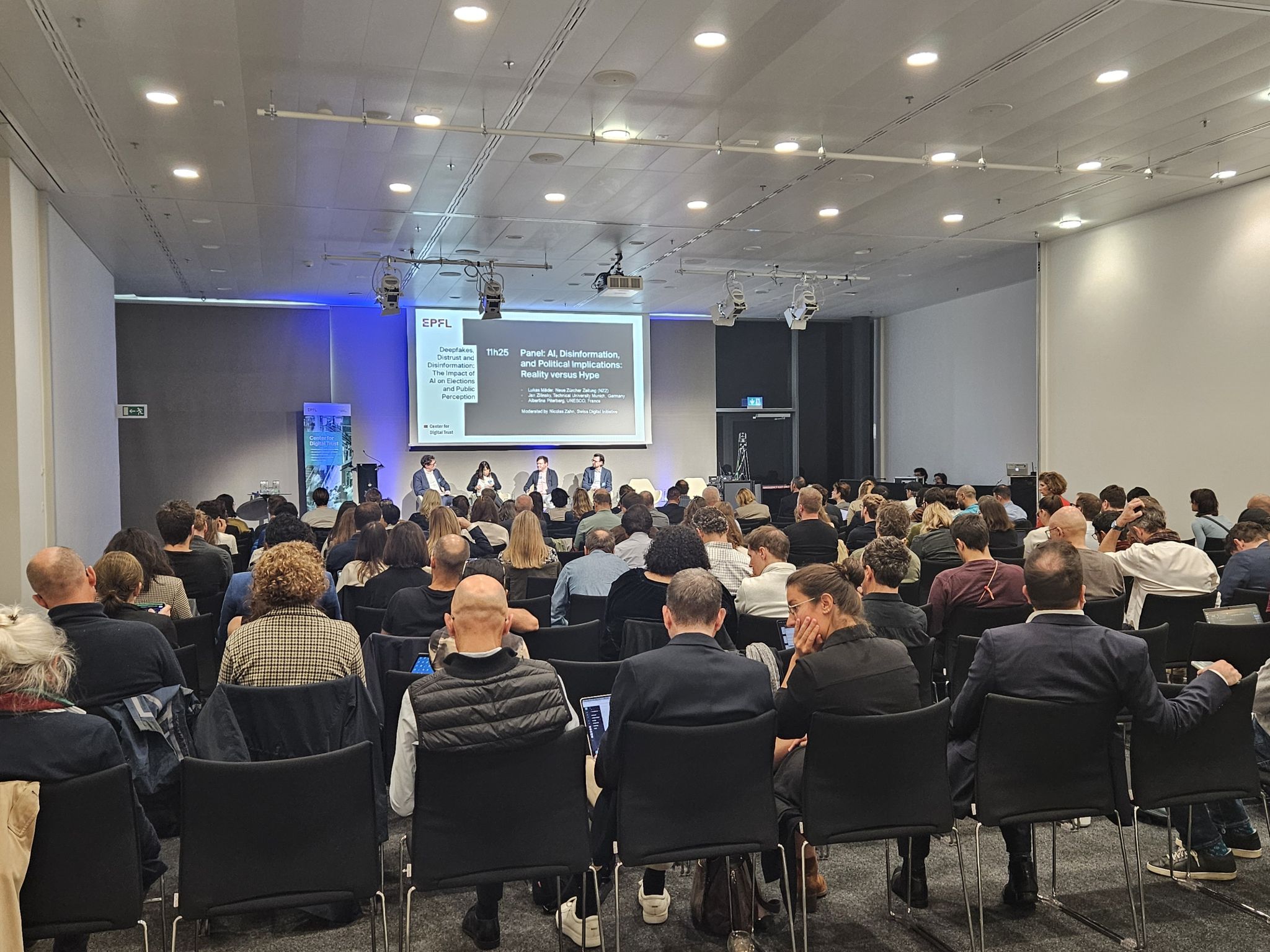
C4DT would like to express a BIG THANK YOU to the speakers, panelists, moderators, to the attendees and to the partner Centers who have made this C4DT conference such a memorable and interesting event! We are very thankful for this opportunity and what it’s brought us!
For those who could not make it to the conference, within the next 2 weeks we will publish the recordings of the talks and panels on C4DT’s Publications Page
Similar to the TikTok ban, this initiative is driven by a combination of protectionism, national security concerns, and data privacy fears. While it is possible for state and non-state actors to hack into any car system if they are determined to do so, the primary concern is China’s completely legal ability to access data collected (…)