A good discussion on the reasons behind the regulatory fervor regarding AI which reveals that, at its core, it is a struggle for power—specifically, the power to determine the values, goals, and means that will eventually be enshrined in regional and international institutional settings governing AI.
Probably nothing undermines digital trust as much as companies that claim to provide it but, in fact, do the opposite. The case of Avast is just another example on the long ledger of data privacy issues resulting from a lack of political will to install sound and robust federal data privacy laws in the US.

Co-organized by the Initiative for Media Innovation and InForm, and hosted by EPFL, this student game jam will focus on the theme of information. Topics could include fact-checking, combating deepfakes, and more.
Guided by a video game designer, a journalist and other IT industry experts, teams will have 24 hours to design and develop their prototypes. At the end, a pitch session will be organized in front of a jury and 3 winners will be selected and awarded exciting prizes!

Join us on October 1st for the C4DT conference entitled “Deepfakes, Distrust and Disinformation: The Impact of AI on Elections and Public Perception, which will be held at the SwissTech Convention Center, EPFL.

The EPFL AI Center and LauzHack is hosting a DeepFake Mini-Hackathon. While rapid advances in GenAI and the increased accessibility to models/compute can lead to impressive advances in science and technology, these tools can be also for malicious purposes, notably deepfake generation. The goal of this hackathon is to leverage the intelligence and creativity of the EPFL community (and surroundings) to better understand and raise awareness about the technology that can be used for deepfake generation and detection.
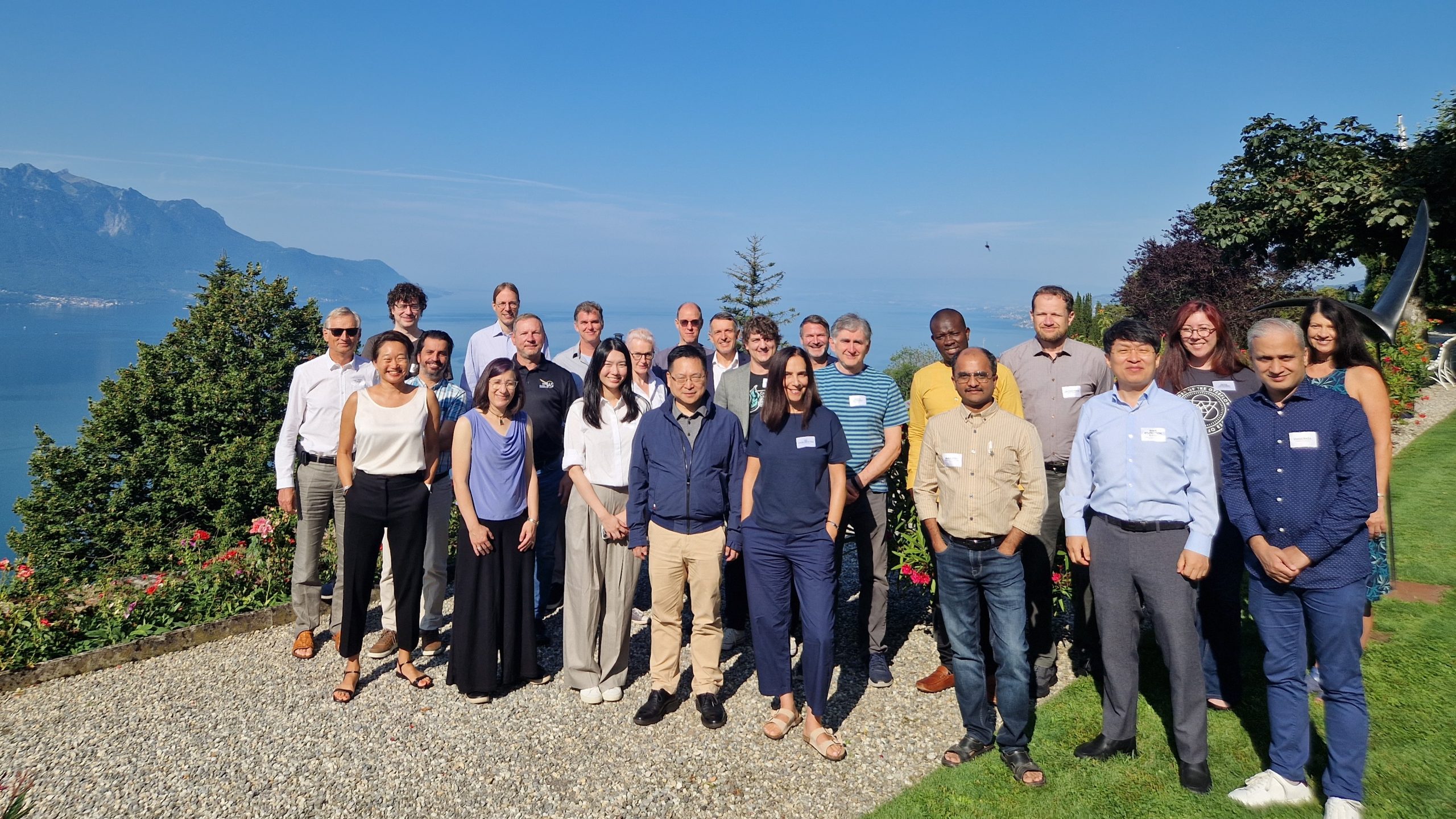
C4DT held the second edition of the summit on August 28-30, 2024. Sixteen globally renowned centers for digital trust gathered in Glion (above Montreux), Switzerland to mutually discuss their respective missions, operations, and challenges. The Glion Summit continued in its aim of establishing a space in which academic centers for digital trust can engage in (…)
Modulation recognition state-of-the-art architectures use deep learning models. These models are vulnerable to adversarial perturbations, which are imperceptible additive noise crafted to induce misclassification, posing serious questions in terms of safety, security, or performance guarantees at large. One of the best ways to make the model robust is to use adversarial learning, in which the model is fine-tuned with these adversarial perturbations. However, this method has several drawbacks. It is computationally costly, has convergence instabilities and it does not protect against multiple types of corruptions at the same time. The objective of this project is to develop improved and effective adversarial training solutions that tackle these drawbacks.
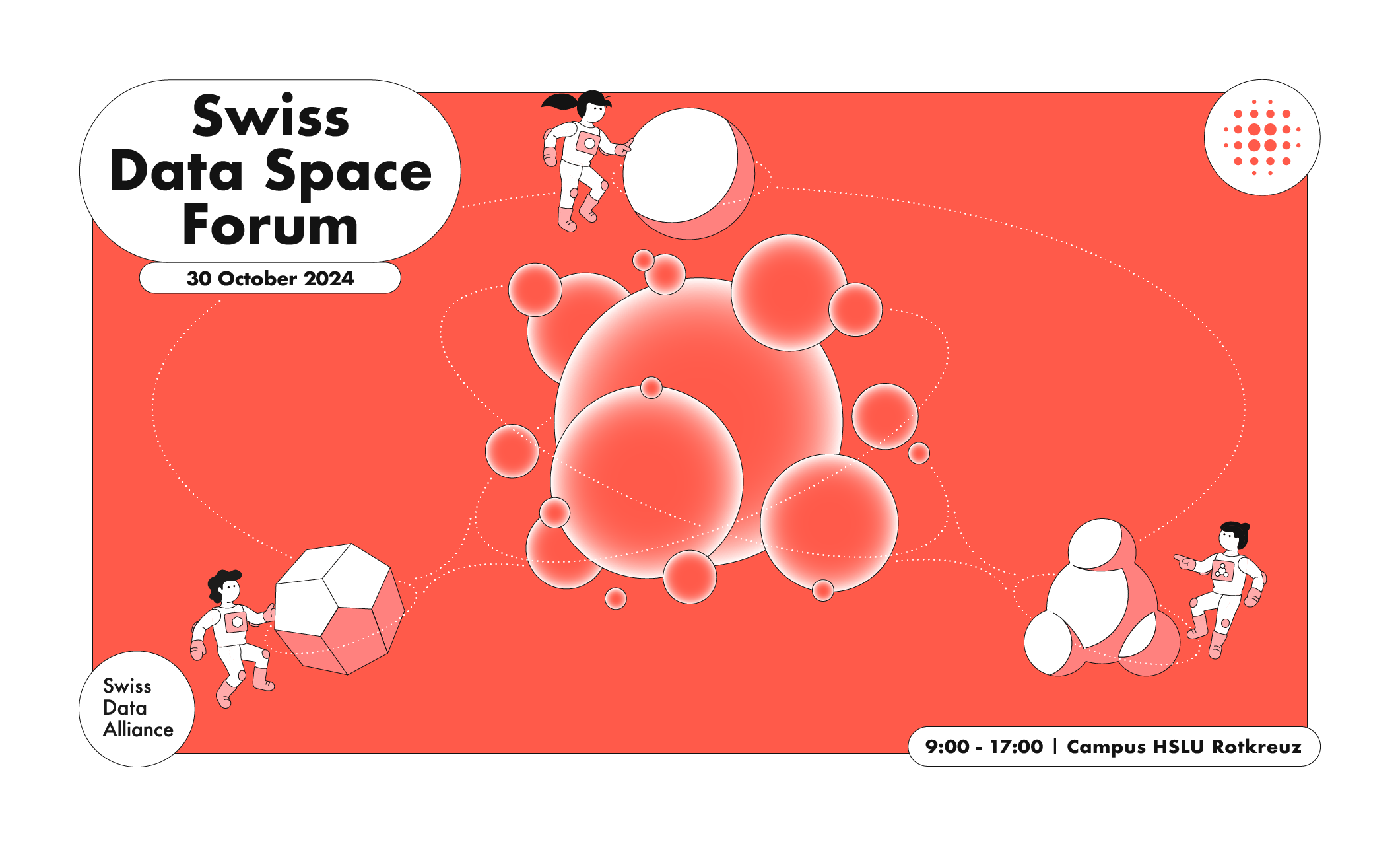
The Swiss Data Space Forum is organised by the Swiss Datta Alliance. It aims to help participants connect with technical, legal and business pioneers from across the country!

ICCP 2024 will be an in-person event in EPFL, Lausanne, from July 22 – 24, 2024. More updates on the website as we get closer to the event.

Investigative journalist Kashmir Hill traces the rise and consequences of facial-recognition company Clearview AI on the future of privacy.

On the 19th of June 2024 the C4DT Factory organized a hands-on workshop to show what can go wrong when Large Language Models (LLMs) are fine-tuned. It was a pleasure working with our partners from armasuisse, FOITT (BIT), ELCA, ICRC, Kudelski Security, SICPA, Swiss Post, and Swissquote. LLMs take the world by storm, but for (…)

In this fourth part of the blog series “Swiss e-ID journey”, we give an overview of the Self-Sovereign Identity (SSI) [10] landscape in CH, EU, and beyond. This allows the reader to put the current effort of the e-ID in context with international efforts in references and implementations regarding e-ID systems. You can read the (…)

Le résultat de ce projet ambitieux, développé en collaboration avec le Image and Visual Representation Laboratory, dirigé par Sabine Süsstrunk, et dont Peter Grönquist fait partie, a été diffusé dans le cadre de l’émission Infrarouge ce mercredi à 20h50 sur RTS1. C’est une séquence de 5 minutes tournée sur le plateau d’infrarouge avec 3 comédiens, dont les visages ont été changés par deepfake en Alexis Favre et deux politiciens suisses. Le texte du débat a aussi été généré par IA. Peter Grönquist est présent sur le plateau de l’émission afin d’expliquer et de commenter le résultat.

The d-voting project from the DEDIS lab at EPFL is a decentralized voting system that leverages blockchain technology and cryptographic algorithms to ensure secure, transparent, and verifiable elections. By using a blockchain as the storage medium, the system allows multiple entities to oversee the election process and enables easy access for public verifiers to ensure (…)

October 1st, 2024, 09h30-17h30, SwissTech Convention Center, EPFL Introduction In 2024, more than 50 national elections are taking place or have already taken place across the globe, from Taiwan’s presidential elections in January, to India’s Lok Sabha election staged over seven phases from April to June, to the US presidential elections in November. Meanwhile, the (…)

A European summit to discuss how to build trust in cyberspace, encompassing topics like strategic autonomy and digital sovereignty. All this is to prospect a way in future scenarios of the cyber sector, while strengthening relations between various stakeholders, based on shared European values.
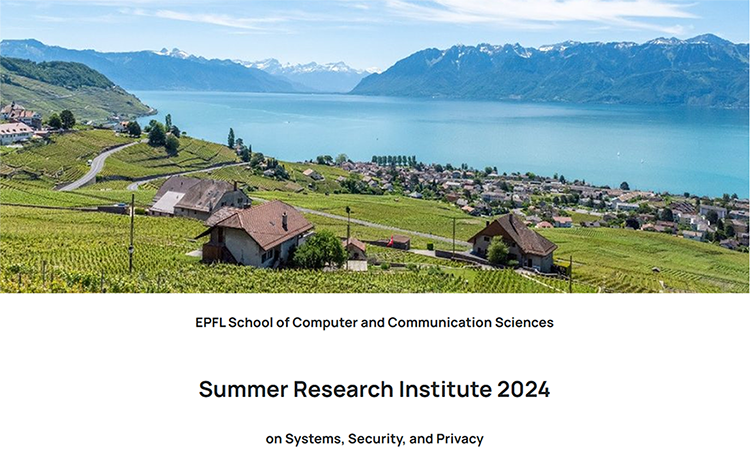
The Research Institute (SuRI) is an annual event that takes place at the School of Computer and Communication Sciences of the École polytechnique fédérale de Lausanne, Switzerland. The workshop brings together researchers and experts from academia and industry for research talks and informal discussions.

The goal of this webinar, organised by the Swiss Support Center for Cybersecurity, is to shed light on cyber resilience related aspects from different view angles. We will see technical measures that aim to improve resilience of systems themselves to more organizational measures that have the goal to absorb the impact even if technical security measures have been successfully circumvented by attackers.

Join us in the further explorations of the Swiss E-ID journey. This time we’re diving into the technical details of the current Public Sandbox Trust Infrastructure of the Swiss government. You’ll learn how the different parts work together, and why self-sovereign IDs are useful to preserve your privacy.
This article is #2 in our series on the Swiss E-ID system. An overview of the system can be found in our first article, Switzerland’s E-ID journey so far.

The registration is open with an early bird price of 290.- CHF (until June 21) and regular price of 340.- CHF afterwards. Please register early to help us plan.
CPDP is a non-profit platform originally founded in 2007 by research groups from the Vrije Universiteit Brussel, the Université de Namur and Tilburg University. The platform was joined in the following years by the Institut National de Recherche en Informatique et en Automatique and the Fraunhofer Institut für System und Innovationsforschung and has now grown into a platform carried by 20 academic centers of excellence from the EU, the US and beyond.

[Lang : Fr][ictjournal.ch] Les populations ont de moins en moins confiance dans l’innovation, selon le baromètre Edelman. En entretien avec la rédaction, Olivier Crochat, directeur du Center for Digital Trust de l’EPFL (C4DT), partage son diagnostic et ses pistes de solution.
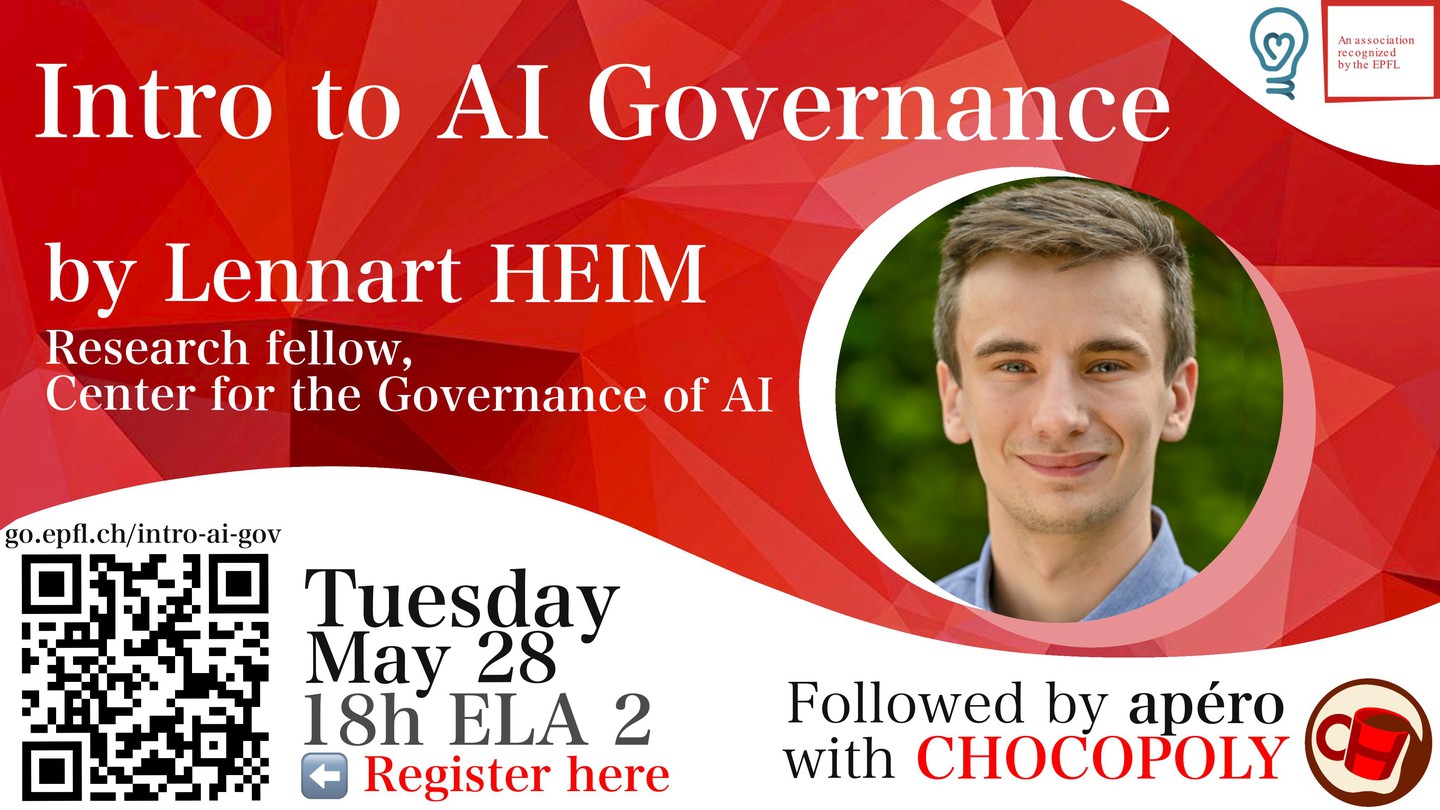
Lennart Heim, Research Fellow at the Centre for the Governance of AI (GovAI), is coming to EPFL to present the field of AI Governance! His research focuses on the role of compute for advanced AI systems and how compute can be leveraged as an instrument for AI governance, with an emphasis on policy development and security implications. Registration is mandatory, register here!