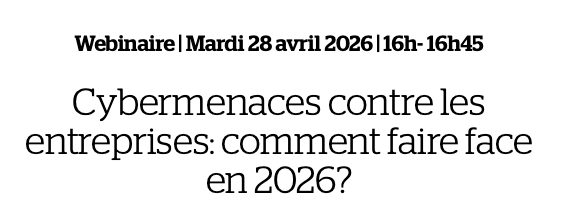
Le dernier rapport de l’Office fédéral de la cybersécurité indique une personnalisation et une sophistication des cyberattaques visant les entreprises et les particuliers en Suisse. Quelles sont les menaces les plus dangereuses qui ciblent l’économie? Comment les prévenir? Et comment bien former son personnel face à ces attaques? Giuseppe Bianco, Head Cash Management chez UBS et Olivier Crochat, directeur exécutif du Center for Digital Trust (C4DT) de l’EPFL en débattront avec Anouch Seydtaghia du journal Le Temps.
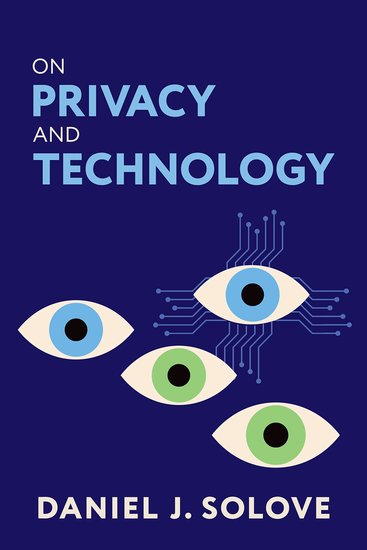
In “On Privacy and Technology”, Prof. Solove distils years of rigorous academic research into an accessible analysis that cuts through the noise surrounding privacy debates with surgical precision. What makes this work particularly compelling is Solove’s unflinching exposure of uncomfortable truths: the consent model is fundamentally flawed, self-regulation has failed and cannot succeed, and current (…)
From Search Engine Optimisation (SEO), to Answer Engine Optimisation (AEO) – also sometimes called Generative Engine Optimisation (GEO), it’s interesting to notice how much we rely on specific tools to “see the world”. With search engines, we had to scroll down the results and decide ourselves which links were relevant (and still feared how much (…)
Finally, the term I’ve been looking for! Technology paternalism: when technical systems shape, restrict, or pre-decide our choices before we can make them. What strikes me most about this concept is how it finds echoes in so many current political debates—collective goals (safety, security, efficiency) versus individual choice; autonomy versus dependency; who holds power and (…)

Choudary, Sangeet Paul (2025) Reshuffle: Who wins when AI restacks the knowledge economy (ISBN-13: 979-8294127213), Independently published, 460 pages. By Olivier Crochat “AI’s value lies less in automating tasks and more in enabling new coordination and decision-making architectures.” In his book Reshuffle, Choudary offers a compelling framework for leaders to navigate the organisational impact of (…)
If you’ve ever looked to Google Maps for inspiration on where to eat and wondered why a restaurant that you know exists didn’t show up, this video breaks it down for you. What resonates with me is the gap the journalist’s investigation lays bare between what people value (food quality, customer service) and what Google’s (…)
I was pleasantly surprised to read this interesting article about SCION, Switzerland’s approach to improved internet routing and security. What struck me was Prof. Perrig’s preference for ‘optionality’ over ‘sovereignty’ — freedom to choose paths, trust roots or network. The solution works yet adoption stalls because organisations are ‘numb’ to known vulnerabilities and reluctant to (…)
The camera hacking issue is problematic because it weaponizes civilian devices without owners’ consent, creating an accountability gap where victims can’t control the security of cameras used against them. It democratizes military intelligence by replacing expensive satellites with cheap consumer cameras,and is nearly impossible to solve since millions of unpatched devices exist worldwide. Most fundamentally, (…)
This article fascinates me because it exposes Proton Mail’s privacy limits under Swiss law. While Swiss law shields direct foreign access, Mutual Legal Assistance Treaties (MLAT) enables indirect cooperation—Swiss firms must disclose available metadata like payment data. This reveals limitations in what Switzerland’s privacy protections can shield users from in cross-border investigations.
I like the idea behind this tool because it tackles a serious online societal problem. I’m curious if and how it will pass the test of time. The key challenge will be to link subjective criteria to objective metrics – a problem we’ve seen with privacy, which still lacks objective benchmarks despite substantial research. But (…)
This analysis of India’s technological dependence reveals patterns that are also applicable to Europe. Attracting foreign tech companies to invest locally ultimately results in profits being exported abroad, exemplifying a kind of digital colonialism. In my opinion, the solution lies in a demand-side strategy that favors local and open-source products over monopolies such as Microsoft (…)
This article points out that the ‘real digital sovereigns’ are the tech companies, who control all ‘vectors’ of sovereignty, from infrastructure, to data, AI models, and services. Beyond the US and China (and North Korea), the only realistic strategy for countries to gain control over their digital sovereignty will be to work together, whether through joining (…)
The C4DT Factory, together with Dr. Anna Sotnikova from Prof. Antoine Bosselut’s Natural Language Processing lab, is happy to invite you to our upcoming hands-on workshop on LLM evaluation and benchmarking. Our hands-on workshop is designed to demystify LLM benchmarking and provide you with a clear roadmap for your next LLM project. You will learn: (…)
Je trouve cet article intéressant, car il apporte, par un professeur de droit reconnu, une clarification juridique précise sur le cloud en Suisse, distinguant clairement ce qui relève du droit de ce qui relève de la stratégie. Le Prof. Métille démontre qu’aucun obstacle juridique n’empêche l’utilisation de clouds américains certifiés DPF. Cette distinction est cruciale (…)
This article illustrates the brutal economics of modern conflict and the fragility of digital infrastructures. Relatively inexpensive drones can render billion-dollar data centers ineffective, calling into question their placement in supposedly “stable” regions. For me, a question remains: What explains the apparent lack of cyberattacks by Iran? Have the U.S. and Israel blocked such attempts (…)
Even 3 years into the current AI hype, it is still difficult to differentiate between its true capabilities and salestalk. Hopefully military leaders have a more clear-eyed view of the technology, as it is clearly not ready to be deployed in high-stakes decision-making processes.
I always liked Anthropic’s stance of doing the right thing and setting standards with regards to security and ethics in LLMs. Unfortunately, they budged and will now only define ‘goals that we will openly grade our progress towards’. These goals will be non-binding, and future LLMs from Anthropic will blaze ahead even if they get (…)
I found this article interesting because it highlights the tension between protecting children online — not just on social media, but also on shopping, gambling and adult sites — and preserving privacy. The challenge of enforcing age laws without collecting sensitive data remains, regardless of whether the burden is placed on users or platforms. eID (…)
This article is quite unnerving: a twenty‑minute hack shows how data‑poisoning can make LLMs tell tall tales, turning sci‑fi fears into real business risk. It’s a wake‑up call to demand provenance, adversarial robustness assessment and scepticism—because trusting chatbots without checking is like relying on a smooth-talking oracle with a hidden agenda. Critical thinking remains your (…)
Les attaques de phishing, de plus en plus ciblées et difficiles à détecter, touchent PME, institutions et particuliers ; pour y répondre la HEIG‑VD a lancé le projet « Combattre le Phishing – quelles innovations apporter » en partenariat avec le Center for Digital Trust (C4DT) de l’EPFL, l’UNIL, la Police cantonale vaudoise, la DGNSI, (…)
Europe’s economy now largely runs on digital payments, making reliance on U.S. card rails a systemic exposure. Sanctions, policy shifts, outages, and data-access demands can all cause economic shocks. This is precisely why Wero is both interesting and timely: it is a bank-led, pan-European layer that can reduce strategic dependency. I’m eager to see transparent (…)
OpenClaw is just the latest in a series of AI-powered tools that turn out to be an absolute security nightmare. It is easy (and up to a certain point justified) to blame individual developers for lowering their guard and abandoning good security practices. On the other hand, there is an enormous pressure on developers nowadays (…)
This article is interesting because it shifts the Moltbook debate away from sci‑fi “bot consciousness” and toward concrete security architecture risks. What could possibly go wrong when thousands of OpenClaw‑like agents —with full root access to their owners’ machines— are frolicking in a shared, untrusted environment, swapping prompts, payloads, and jailbreak tricks? His advice is (…)
Parler de souveraineté numérique en Europe devient de plus en plus courant. Même si ça va prendre beaucoup d’années d’avoir un contre-poids aux grandes entreprises américaines, les solutions émergent et s’organisent. Une fois qu’il y aura de l’argent qui alimente ces solutions alternatives, open source ou pas, l’utilité de ces solutions va augmenter drastiquement.