C4DT’s Factory provides a hands-on technical training for C4DT partners on a tool called Calypso. This tool allows to store secrets on a blockchain, and to dynamically update the access control. The hands-on training has been initiated by a request from SICPA. They were looking for a way to store the private keys used in (…)
With the massive use of Fake News and the Cambridge Analytica scandal, the general public is aware that AI can harm democratic processes. But on its bright side, can machine learning help us to better understand and improve democracy?
Applied Machine Learning Days at EPFL in 2021 will consists of monthly thematically focussed conferences on machine learning and artificial intelligence with top speakers from around the world. The AI & Democracy track explores the challenges and opportunities that lie at the intersection of politics, law, and machine learning – beyond Fake News and Cambridge Analytica. Open Government Initiatives have opened access to vast amounts of data that political scientists, lawmakers, legal experts, journalists, and data scientists exploit to gain insights into political and legal processes.
For more information please click below.
Monday, January 25th 2021, 09h00-17h00, online
During this event the 4 associate partners, who joined the C4DT as part of the C4DT start-up program, will present themselves to the C4DT community. For two years Regdata, strong.network, Taurus and Xorlab will complement the already diverse group of partner companies through their start-up perspective and collaborate and share insights on trust-building technologies. Virtually meet them, learn about their activities and ask questions and discuss with your start-up(s) of interest in 4 concurrent break-out sessions.
This is a C4DT community event only.
This article looks into the optimizations of the golang compiler with regard to different usage of structs. It answers the following questions: Does it avoid unnecessary structure copies? Does it inline where necessary? To answer theses questions, I wrote a small example and decompiled it to see how well it behaves. For all the examples, (…)
Connection Failures There are some common reasons why the OmniLedger login can fail. So far we have seen the following ones: Corporate firewalls Private browser settings If you have a corporate firewall that blocks access to non-standard ports, the only thing you can do is to remove the VPN. This is often enough to let (…)
The Brussels Privacy Hub of Vrije Universiteit Brussel (VUB) and the Future of Privacy Forum cordially invite you to the 2020 Brussels Privacy Symposium. 2 panels will discuss the research and the protection of personal data under the GDPR. The topic of the first panel is “Complex Interactions: the GDPR, Data Protection and Research”, while the sencond panel will discuss the topic “Using Sensitive Data in Research to Counter (Hidden) Bias and Discrimination”.
To view the full agenda & for more information click below to visit FPF’s Brussels Privacy Symposium webpage.
Wednesday, December 2nd 2020, 14:00-17:15 (CEST), online
The second wave of the COVID 19 pandemic is surging in the world. Many countries had high expectations from digital contact tracing as a means to improve the efficiency of the manual tracing. In this webinar renowned international experts present their research results and views on solutions for digital contact tracing. We critically discuss the deployed solutions with respect to their security, privacy and effectiveness. In particular, we discuss the risks and threats of using solutions that are provided by giant data collectors. The event is supported by the Collaborative Research Center CROSSING (funded by the German Research Foundation DFG).
Participation is free of charge. In order to register and to see the full agenda please click below.
December 1st 2020, 13h-18h30, online
The C4DT/Factory works to bring EPFL’s great ideas to our partners. We do so by working on the existing code created in the labs. Because most of the code written in the labs has the goal to create graphs in a paper, it is not directly usable in another project. For this reason we created (…)
IEEE International Symposium on Hardware Oriented Security and Trust (HOST) is the premier symposium that facilitates the rapid growth of hardware-based security research and development. Since 2008, HOST has served as the globally recognized event for researchers and practitioners to advance knowledge and technologies related to hardware security and assurance.
For more information click below.
We are delighted to announce a new date for the Data 2025 Conference which will take place in an online format.
This conference, organized jointly by the Graduate Institute Geneva’s Center for Trade and Economic Integration (CTEI) and the Center for Digital Trust (C4DT), will discuss what data is, based on technical and economic realities. It will start with the present, but look forward to the opportunities, and the challenges, that new technologies will bring for the year 2025.
For more information please click below.
Some notes from https://lethain.com/managing-technical-quality/ – most of the comments are copy/pasted, so ‘I’ is the author… In italic some more C4DT-specific notes. Technical quality is a long-term game. There’s no such thing as winning, only learning and earning the chance to keep playing. Do the quick stuff first! Hot Spots Before defining new processes, measure (…)

A recent conference held by EPFL’s C4DT (Center for Digital Trust), and live streamed live streamed, with some of the world’s leading experts on cyber security, fake news and democracy, heard that citizens and governments should re-gain their sense of alarm and do something to urgently address what we all know is a huge, and growing, problem.
Please click below for more info.
Delivered by the Factory in collaboration with the Academy, these trainings are designed for researchers who want to adopt the best practices in their day-to-day work.
Delivered by the Factory, the main goal of the hands-on trainings is for partners to better understand and integrate the libraries offered by the C4DT.
Organized by the Academy and delivered by accomplished EPFL professors and seasoned industry professionals. These courses are designed for those who want to better understand ICT and Digital Trust topics.
The Academy team creates tailor-made courses and trainings for the C4DT partners. The team offers content development and course co-creation, and handles all the logistics and operational aspects of the course organization.
How to get data back on ByzCoin OK, now it happened – I lost my addressbook on ByzCoin. As we’re using the Partner-login internally, I have a list of all accounts I created on the blockchain. Currently it’s not encrypted using Calypso yet, work in progress. So my account on Byzcoin has a slice of (…)
There are a variety of coding guidelines at EPFL. Some focus on a lab’s preferred language and their specific tools, some are more on project handling and general git usage. Most are a mix of the above. Sadly, theses guidelines aren’t scrupulously followed, aren’t usually automatically checked and some are even unknown to the people (…)
For some time it was impossible to use the c4dt matrix chat on the mobile phones, as RiotX didn’t work correctly with the OmniLedger login. Now you can use the Element app together with our login to have matrix chat on your phone. TL;DR Of course you just want to know how it works: Add (…)
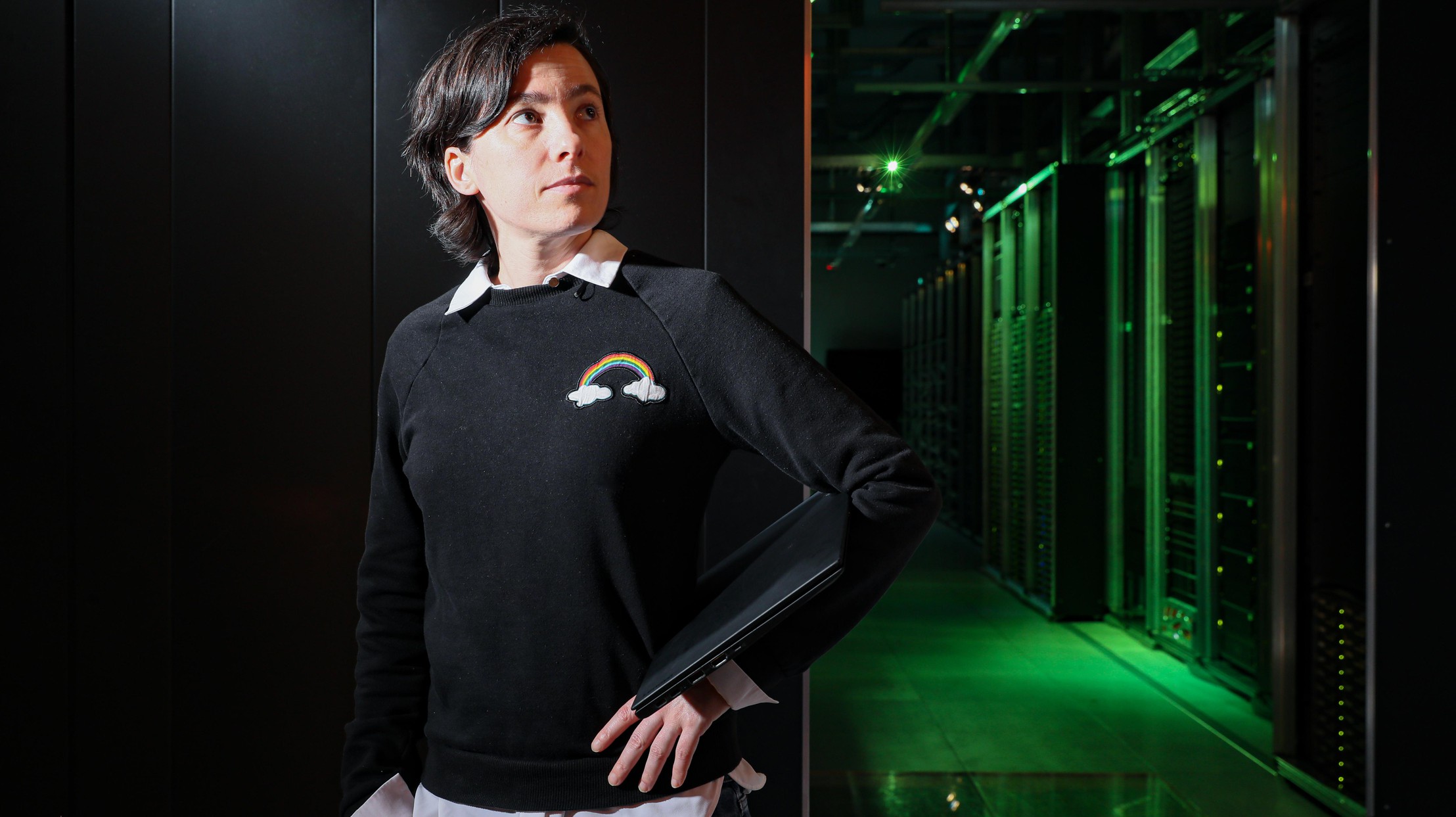
The C4DT-affiliated SPRING laboratory has developed Datashare Network, a decentralized search engine paired with a secure messaging system that allows investigative journalists to exchange information securely and anonymously. An scientific article on this subject will be presented during the Usenix Security Symposium which will be held online from August 12 to 14. For more information access EPFL’s announcement below.
We are proud to announce that Roche has just joined the C4DT as partner. Its arrival adds the pharmaceutical industry to the already broad field of economic sectors represented within the C4DT. We are convinced that this partnership will add new perspectives and insights to digital trust and lead to fruitful collaborations among the partners and the affiliated laboratories.
The EPFL COVID-19 academic committee has given the green light to twenty research projects directly addressing the COVID-19 crisis. In their research, teams from all the Schools work on priority aspects of the pandemic: preventing or tracking contagion, cure and vaccines, diagnostics and testing, and policy and data. In this workshop we will present a selection of 5 to the C4DT community and discuss potential collaboration.
For more information about this event please click below.
The C4DT organizes a panel discussion on Quantum safety – security against quantum attacks. It aims to establish a common understanding of quantum terminology, to grasp the concrete risks from quantum computing faced by companies, and to raise awareness among leaders to prepare enterprises now for a secure future. Among the panelists are Dr. Tommaso Gagliardoni, Kudelski Security, Dr. Dimitar Jetchev, Inpher, Dr. Grégoire Ribordy, ID Quantique and Dr. Juan Troncoso-Pastoriza, EPFL.
September 16th, 2020, 16:00-19:00 @ EPFL, 1014 Ecublens, Switzerland. Please note that this event is for the C4DT community only. Please contact david.viollier@epfl.ch for more information.
In times of crises, we become acutely aware how important infrastructures are as a basis for society to continue to function … and to recover in the aftermath. But this is not only the question of the importance of foundational infrastructures, such as telecom, postal services, public transport and electricity, it is also the question of their resilience. In this webinar, we will discuss these questions for the case of Switzerland, together with representatives of the major Swiss infrastructure providers – Swissgrid, SBB, Swiss Post and Swisscom. The webinar will be introduced and moderated by Prof. Matthias Finger, Swiss Post Chair in Management of Network Industries at EPFL and will benefit from the critical view of a representative of the Swiss Confederation in charge of the national security network.
Wednesday, June 2nd, 10:30-12:00, remote.
For more information click below.