One of the most well-known framework to create cross-platform apps is Electron. In it you write your app in Javascript or Typescript. This code runs in a node environment and the GUI is displayed in a browser. Like this, the app can be ported easily to different operating systems. Even mobile systems are supported. One (…)
Public and private institutions around the world are facing imminent risk of cyber assault threatening national security, critical assets and business continuity. Now, more than ever, building cyber resilience is an urgent priority for leaders in business and government.
The exclusive gathering will unite CEOs, board members, and government to discuss strategies for overcoming new cyber threats.
The conversation around cyber risk and business resiliency will address cyber security as a strategic business issue as opposed to just an operational one.
State-of-the-art architectures for modulation recognition are typically based on deep learning models. However, recently these models have been shown to be quite vulnerable to very small and carefully crafted perturbations, which pose serious questions in terms of safety, security, or performance guarantees at large. While adversarial training can improve the robustness of the network, there is still a large gap between the performance of the model against clean and perturbed samples. Based on recent experiments, the data used during training could be an important factor in the susceptibility of the models. Thus, the objective of this project is to research the effects of proper data selection, cleaning and preprocessing of the samples used during training on robustness.
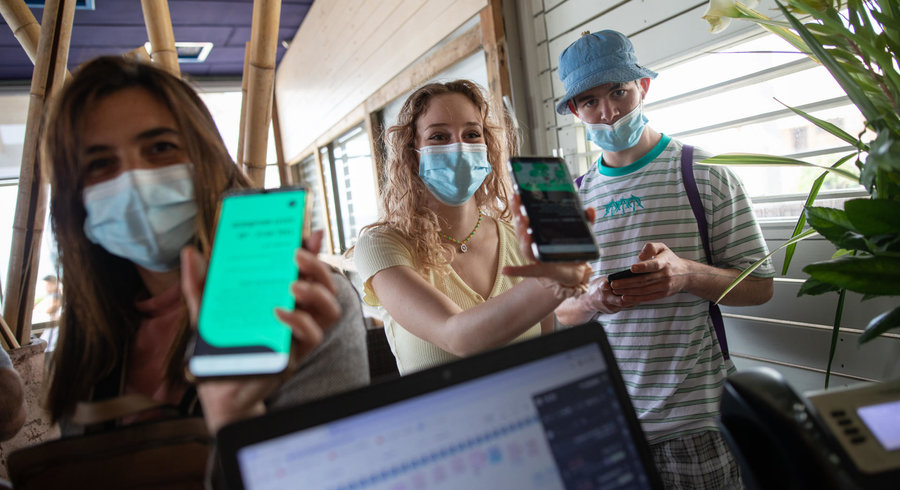
Contact tracing is a time-proven technique for breaking infection chains in epidemics. Public health officials interview those who come in contact with an infectious agent, such as a virus, to identify exposed, potentially infected people. These contacts are notified that they are at risk and should take efforts to avoid infecting others—for example, by going into quarantine, taking a test, wearing a mask continuously, or taking other precautionary measures.
Recently, deep neural networks have been applied in many different domains due to their significant performance. However, it has been shown that these models are highly vulnerable to adversarial examples. Adversarial examples are slightly different from the original input but can mislead the target model to generate wrong outputs. Various methods have been proposed to craft these examples in image data. However, these methods are not readily applicable to Natural Language Processing (NLP). In this project, we aim to propose methods to generate adversarial examples for NLP models such as neural machine translation models in different languages. Moreover, through adversarial attacks, we mean to analyze the vulnerability and interpretability of these models.
The Center for Digital Trust is an academic-industry alliance of international relevance that facilitates innovation in digital trust services and products. The center brings together 14 industry partners, 46 EPFL laboratories, civil society, and policy actors to collaborate, share insights, and gain early access to trust-building technologies, building on state-of-the-art research at EPFL and beyond. (…)
5 service domains respond to partners’ needs in terms of collaboration and community, education, open-source state-of-the-art prototype showcasing and projects

Robert Mardini has been the director-general of the International Committee of the Red Cross since 2020. In this interview, Mardini – who holds a civil engineering degree from EPFL – gives us an overview of the ICRC’s work and discusses the links between science and humanitarian action.
A fast and efficient blockchain created by the lab of prof. Bryan Ford.

The Federal Council described cyberattacks as “a serious threat for Switzerland’s security and economy” and proposed a law for a reporting obligation for cyberattacks on critical infrastructures in its press release of January 12th 2022.
This 1-day conference, organized by C4DT in collaboration with UNIL’s Faculty of Law, Criminal Sciences and Public Administration (FDCA) and Trust Valley, will bring together government, public and private sectors and academia to discuss the proposed reporting obligation. Through case studies of past cyberattacks in Switzerland and simulations of possible critical infrastructure attacks, we aim to raise awareness of the cyber-risks with communal, cantonal and federal authorities, critical infrastructure providers as well as all organisations impacted by this law.
For more information about the event (speakers and agenda) please click below.
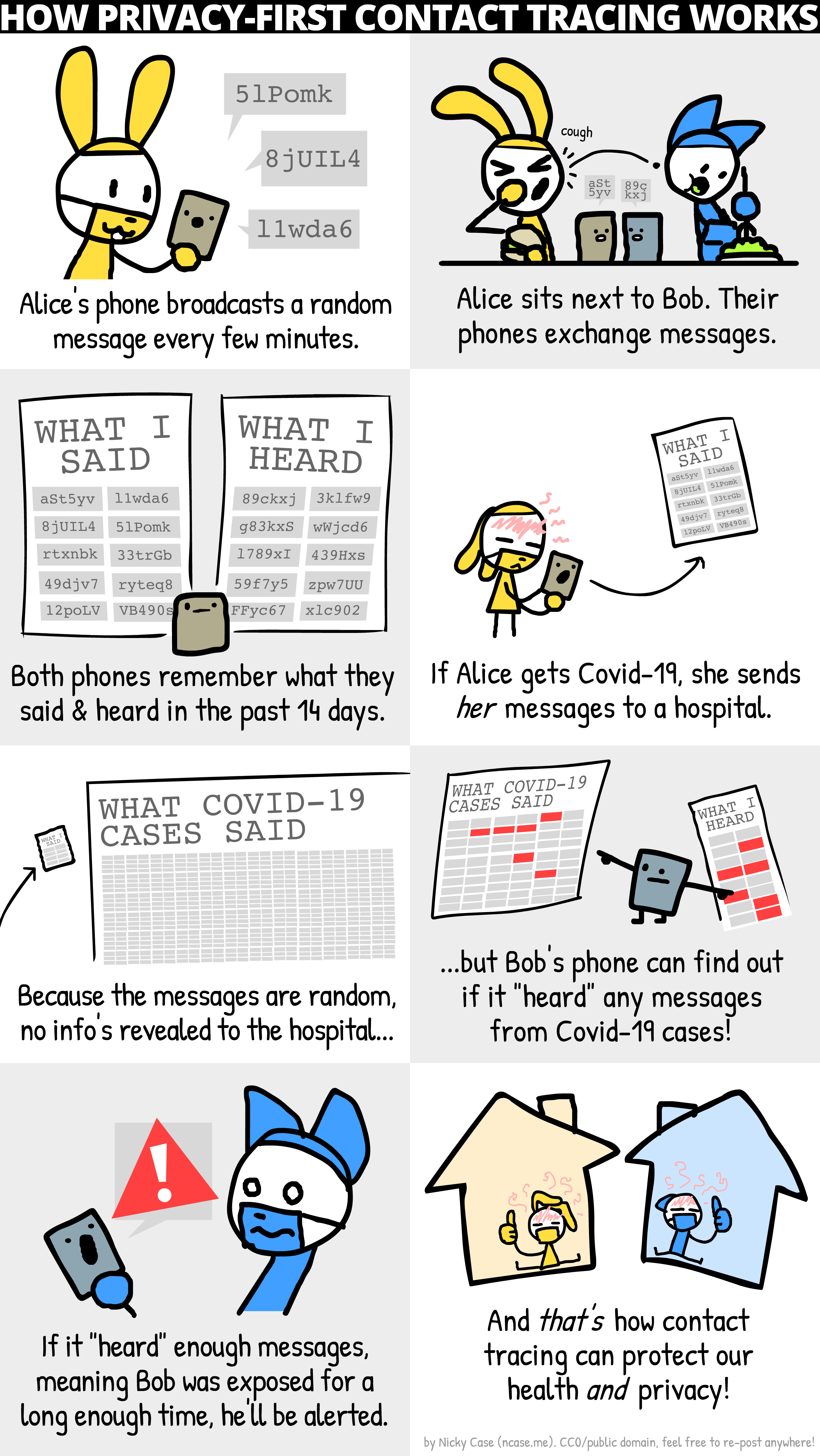
In response to the COVID-19 disease that has stormed the world since early 2020, many countries launched initiatives seeking to help contact tracing by leveraging the mobile devices people carry with them. The Federal Office of Public Health (FOPH) commissioned the effort for Switzerland, which resulted in the official SwissCovid application and infrastructure. This document retraces its history and the main contributions from the EPFL.
As we all know, writing tests when developing software is very important¹. Indeed, most modern programming environments have frameworks to write and run tests, sometimes even in the standard tooling: pytest for Python, cargo test for Rust, go test for Go, etc. Let’s set aside the actual writing of the tests themselves for a moment, (…)
In response to the COVID-19 disease that has stormed the world since early 2020, many countries launched initiatives seeking to help contact tracing by leveraging the mobile devices people carry with them. The Federal Office of Public Health (FOPH) commissioned the effort for Switzerland, which resulted in the official SwissCovid application and infrastructure. This document (…)
I’m still working on my fledger project. It’s goal is to create a node for a decentralized system directly in the browser. For this I want the following: Works in the browser or with a CLI: have a common codebase but use different network implementations Direct browser to browser communication: use the WebRTC protocol for (…)
DuoKey receives the Digital Award for Start-up of the Year 2022 ! During the Spring Party organized by the ICTjournal , our Swiss startup, active in the field of cybersecurity, was elected Swiss cyber start-up of the year 2022 by a jury of the CIOs member

The 11th FSR Annual Conference is an occasion to take stock of the progress made on the objectives outlined in the EU Data Strategy the Data Governance Act in the network industries. This new regulation will have impact on the various network industries, and at our conference, we will particularly focus on the areas of energy, climate, transport and telecommunications.
The objective of the TMM project is to identify, at an early stage, the risks associated with new technologies and develop solutions to ward off such threats. It also aims to assess existing products and applications to pinpoint vulnerabilities. In that process, artificial intelligence and machine learning will play an important part. The main goal of this project is to automatically identify technology offerings of Swiss companies especially in the cyber security domain. This also includes identifying key stakeholders in these companies, possible patents, published scientific papers.
For a long time I tried to understand what Proof-of-History brings to the table. What is it useful for? What problem does it solve? At the beginning of may 2022, Victor Shoup, who is a renowned cryptographer and currently working at DFinity, took a deep dive into Proof of History. He wrote an opinion paper on (…)

Chelsea E. Manning is a technologist and network security expert whose actions showed the world that the conscience of individuals can make urgent change through bravery and determination. She speaks on the social, technological, and economic ramifications of Artificial Intelligence, and on the practical applications of machine learning. She is a vocal advocate for government transparency and queer and transgender rights as @xychelsea on Twitter and through her op-ed columns for The Guardian and The New York Times.
Lightarti is a mobile library developed in Rust, in collaboration with the SPRING lab at EPFL, the Tor team, and the original Arti library team.
![[FR] Montres connectées : des mesures pas toujours fiables](https://c4dt.epfl.ch/wp-content/uploads/2022/04/Screenshot-2022-04-30-at-11.19.58-e1651310691989.png)
C4DT Academic Director Jean-Pierre Hubaux discusses the privacy and security of smart watches on a new episode of RTS’s ‘A bon entendeur’.
![[FR] DIS, POURQUOI? – La crypto (1/5)](https://c4dt.epfl.ch/wp-content/uploads/2022/04/ofzeu6-25815337.image_.jpg)
Une série d’épisodes traitant de la crypto dans l’émission “DIS, POURQUOI?”, avec Rachid Guerraoui, Professeur dʹalgorithmes en réseau et chercheur à lʹEPFL.
Course given under the GymInf program of swissuniversities by Linus Gasser.
Subjects for the course:
– why your opinion is worth money
– abusive data collection on personal devices
– protecting internet connections using TLS
– usefulness of blockchains for the decentralization of trust
– homomorphic cryptography for secure data sharing
– legislation on security and privacy in Switzerland, Europe, and elsewhere
Disco is a framework to implement machine learning algorithms that run in a browser. This allows testing new privacy-preserving decentralized ML algorithms.