![[FR] Journée de la protection des données 2023](https://c4dt.epfl.ch/wp-content/uploads/2023/01/pexels-pixabay-60504-scaled.jpg)
A l’occasion de la Journée de la protection des données, la Faculté de droit, des sciences criminelles et d’administration publique de l’Université de Lausanne organise une conférence publique en collaboration avec le Préposé fédéral à la protection des données et à la transparence, le Centre universitaire d’informatique de l’Université de Genève et ThinkServices.
![[FR] Les promesses économiques de l’IA](https://c4dt.epfl.ch/wp-content/uploads/2023/01/pexels-pixabay-355948.jpg)
Podcast audio, au sommaire: les horizons économiques de l’intelligence artificielle; le train et l’avion en accord pour réduire l’empreinte voyage; et reportage avec les manifestants au Pérou.
During the month of December, Advent of Code passes out a new puzzle every day. The daily challenges are a fun way to learn new algorithms and getting to know new ways of programming. In our software engineering team we followed along at least the first half of the programming challenges and enjoyed discussing the solutions (…)

The past two years saw a new vulnerability make headlines: software supply chains. Events such as the SolarWinds and Kaseya cyberattacks or the discovery of the Log4j vulnerability forced organizations to reevaluate their cyber risk exposure.
This one-day conference provides a platform for academia, government, business, NGOs and standard-setting bodies to shed light on software supply chain risks, outline persisting challenges, and discuss mitigation tactics, solutions, and best practices as well as emerging frameworks and standardization initiatives.
For more information click here.

EPFL professor Jacques Fellay, who served on the Swiss National Covid-19 Task Force and whose lab is affiliated with C4DT, has been selected for a new advisory committee that the government set up recently so policymakers and scientists can continue their joint efforts.

How we interact with computers has just changed overnight, forever. A new class of generative AI has emerged that will revolutionize communication and information – and health along with it.

EPFL’s Professor Giovanni De Micheli was recently recognized for his strong impact on the electronic system design industry, and he sees another decade of rapid design innovation ahead.
Why? Nowadays, Linux is deployed in many component of the network fabric. Your home NAT probably runs it, your datacenter’s router also. As it needs to handle incoming packet on gigabits links, the speed at which the system handles the packets becomes important. If you run your router in user-space, the kernel needs to read (…)
November 5th, 2021, Swiss Tech Convention Center, EPFL Distributed Ledger Technology has the potential to reshape the traditional financial system. An example is decentralized finance, which allows people to combine open-source building blocks into sophisticated financial products utilizing DLT. Central banks, as another example, face growing competition from private actors offering their own digital alternative (…)
September 23rd, 2022, Starling Hotel, EPFL The Federal Council described cyberattacks as “a serious threat for Switzerland’s security and economy” and proposed a law for a reporting obligation for cyberattacks on critical infrastructures in its press release of January 12th 2022. These reports should allow the National Cybersecurity Centre (NCSC) to assess the threat situation (…)

This installment of C4DT’s Digital Governance Book Review focuses on Vili Lehdonvirta’s 2022 book Cloud Empires. How Digital Platforms are Overtaking the State and how we can Regain Control Cambridge, Massachusetts: The MIT Press, 283 pages.
An acutely current and fascinating analysis of the adverse effects digital platforms have on our societies.
For a side-project of mine I’m looking at Kademlia (Wikipedia), which is used in peer-to-peer (P2P) systems. One problem of P2P systems is that nodes come and go randomly. So it’s not easy to retrieve stored data. Where to store data? And then how to find it again? What happens if a node with the (…)
DevOps is rather a confusing term. Everyone uses it a lot and not everyone is able to define what it really means. Here are some thoughts of what our team think when we hear DevOps: CI/CD. Source-code, compilation. Kubernetes, Ops responsabilities. Automated tests. These are some good talking point, as they definitely have to be (…)
Some time ago I read the developer skill matrix and thought it was very interesting. I put it in the infamous “Read later” bookmark folder, and actually came back to it! So last Monday, during our regular group catchup time, I presented this page. In fact every week one of us three engineers presents something (…)
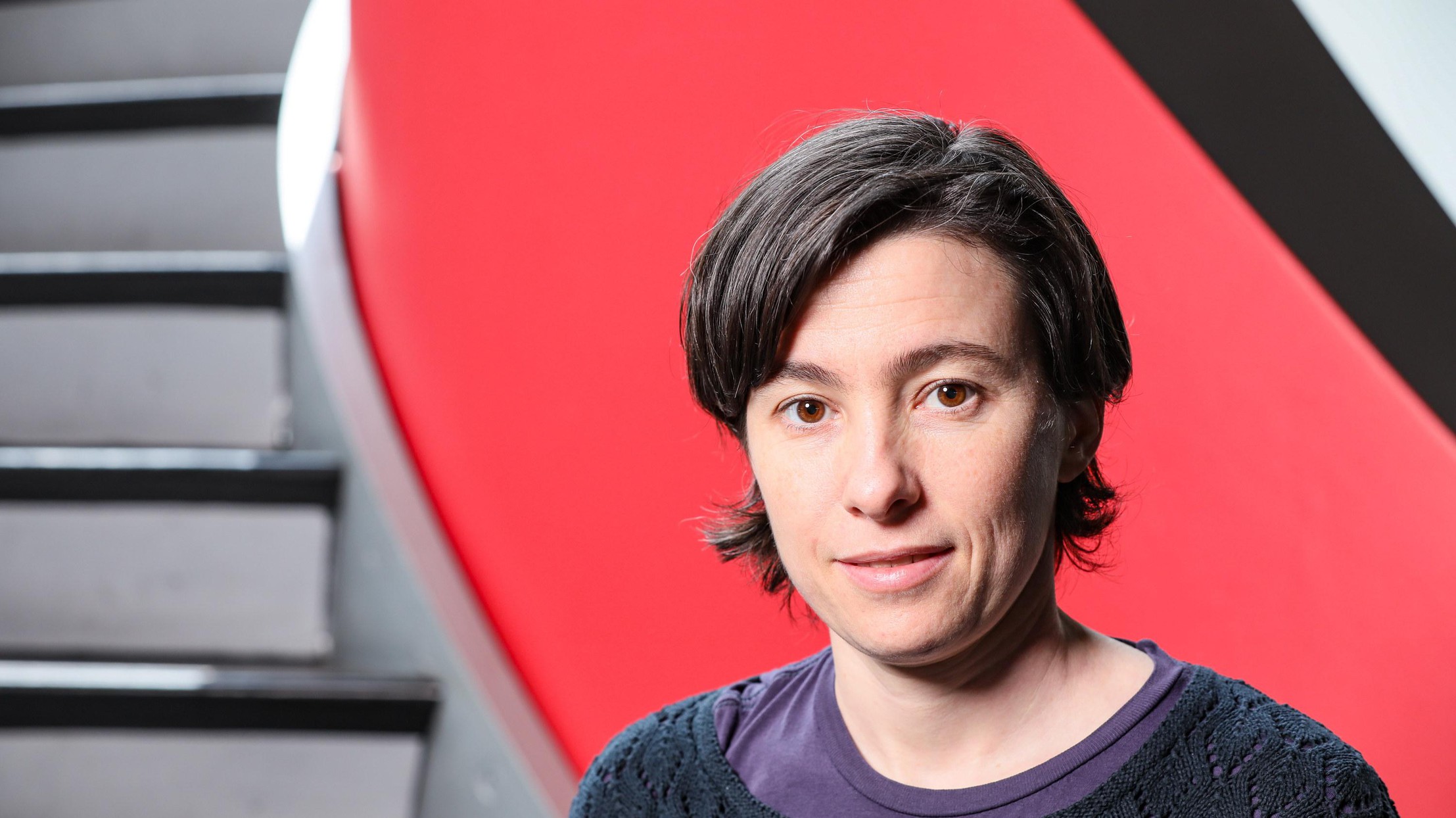
IC Tenure Track Assistant Professor Carmela Troncoso has won this year’s EPFL Latsis University Prize. She has been recognized by the Latsis Foundation for exceptionally important contributions at a Swiss university by researchers under the age of 40.

The challenges faced by humanitarian organizations in general and by the International Committee of the Red Cross (ICRC) in particular are immense. Therefore, EPFL and ETH Zurich are joining forces with the ICRC through the Engineering for Humanitarian Action initiative to explore innovative solutions to such crises.
10 Novembre 2022, 17h30, Forum Rolex Learning Center, EPFL Est-ce que Google connaît suffisamment une personne pour être capable de la reconstruire ? Ou même de permettre à une autre personne d’imiter sa vie en se basant sur ses données ? Dans le documentaire “Google connaît toute ma vie”, une actrice tente l’expérience : elle (…)

On the Digital Cooperation Day, the Geneva Internet Platform (GIP) will present the findings of the second edition of the Geneva Digital Atlas which maps overall digital developments in International Geneva. Based on this mapping, the discussion will be conducted with the UN Secretary-General’s envoy on technology (a key catalyst of the process towards the GDC) on priority policy questions for actors in Geneva. The discussion will include answers that the vibrant Geneva scene can provide to the global community.

Est-ce que Google connaît suffisamment une personne pour être capable de la reconstruire ? Ou même de permettre à une autre personne d’imiter sa vie en se basant sur ses données ? Dans le documentaire “Google connaît toute ma vie”, une actrice tente l’expérience : elle utilise les données Google d’une autre jeune femme pour se mettre à sa place — et finalement la confronter. Que va-t-il se passer ?
À l’issue de la projection du documentaire, une discussion autour des aspects éthiques, techniques et sociétaux abordés sera proposée en présence d’un panel d’expert·e·s.
Cet événement se déroulera le 10 novembre à 17h30 au Forum Rolex à l’EPFL. L’inscription est gratuite, dans la limite des places disponibles.
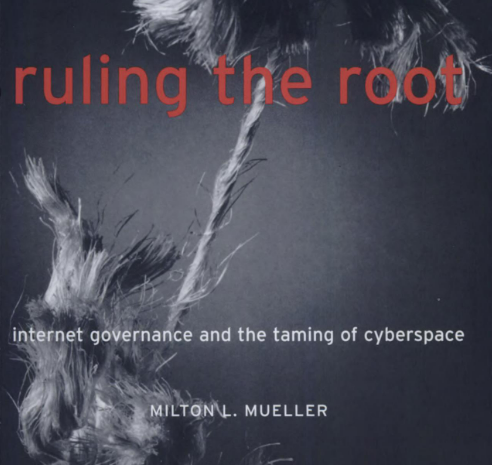
With the discussion of this book, the C4DT begins a new publication series, the Digital Governance Book Review: Hereafter, every month, we will summarize and contextualize a book we consider relevant. The book will be either a classic, whose lessons are worth recalling, or a new publication our readers should become aware of. Over the next two years, we plan to present approximately 25 books that we think will help our readers understand the essence of digitalization.
We begin the series with the now classic 2002 book by Milton Mueller Ruling the Root. Internet Governance and the Taming of Cyberspace. Cambridge, Mass.: MIT Press, 317 pages.
Milton Mueller’s, by now, classic on the history of internet governance is a meticulously researched, documented, and analyzed a work and can arguably be considered is a masterpiece of the social and political history of technology.
For our weekly meeting-presentation I took the stackoverflow-stats from 2022. Then with the team we went through it and discussed the different statistics. First I thought we’ll get bored quickly, but after 1h30 I had to push the meeting to other subjects. So here are some things we found: Developer Profile Learning how to code: (…)
Do you ever code in modern Javascript? Then if you have multiple projects you are probably happy that nvm exists. Or maybe you’re more of a Python person? Then you must know about pyenv. Java? jenv or sdkman! Thing is, you often need to have multiple versions of a tool or binary installed when you (…)
Have you ever tried using ssh on a train? Or closed your laptop and found that all of your remote session are now frozen? Or using it via a crowded antenna tower? In all theses cases, ssh fails to work as expected. This is due to the fact that common ssh connections are transported via (…)