To serve the 80 million forcibly-displaced people around the globe, direct cash assistance is gaining acceptance. ICRC’s beneficiaries often do not have, or do not want, the ATM cards or mobile wallets normally used to spend or withdraw cash digitally, because issuers would subject them to privacy-invasive identity verification and potential screening against sanctions and counterterrorism watchlists. On top of that, existing solutions increase the risk of data leaks or surveillance induced by the many third parties having access to the data generated in the transactions. The proposed research focuses on the identity, account, and wallet management challenges in the design of a humanitarian cryptocurrency or token intended to address the above problems. This project is funded by Science and Technology for Humanitarian Action Challenges (HAC).
Theoretical computer science and computer security
Modulation recognition state-of-the-art architectures use deep learning models. These models are vulnerable to adversarial perturbations, which are imperceptible additive noise crafted to induce misclassification, posing serious questions in terms of safety, security, or performance guarantees at large. One of the best ways to make the model robust is to use adversarial learning, in which the model is fine-tuned with these adversarial perturbations. However, this method has several drawbacks. It is computationally costly, has convergence instabilities and it does not protect against multiple types of corruptions at the same time. The objective of this project is to develop improved and effective adversarial training solutions that tackle these drawbacks.
In this project, we are working with the ICRC to develop technical methods to combat social media-based attacks against humanitarian organizations. We are uncovering how the phenomenon of weaponizing information impacts humanitarian organizations and developing methods to detect and prevent such attacks, primarily via natural language processing and machine learning methods.

To design the circular economy of smart cities, a new way of thinking about urban infrastructures is necessary. whether it is the installation of new waste to energy plants or developing cutting-edge digital systems to safeguard electricity and water, a new way of designing cities is needed.

The IEEE TCCPS Technical Achievement Award recognizes significant and sustained contributions to the cyber-physical system (CPS) community through the IEEE Technical Committee on Cyber-Physical Systems (TCCPS). The award is based on the impact of high-quality research made by the awardee throughout the lifetime. It consists of a plaque and a citation. It was awarded to C4DT affiliated professor Giovanni De Micheli “For sustained contributions to smart sensors, wearable and implanted electronics, and cyber-medical systems.”.

Many popular cloud applications collect enormous amounts of information on their users. […] Raising awareness of the issue, and providing ways to reduce it, is a worthy goal.

Encryption provides a solution to security risks, but its flipside is that it can hinder law enforcement investigations. A new technology called client-side scanning (CSS) would enable targeted information to be revealed through on-device analysis, without weakening encryption or providing decryption keys. However, an international group of experts, including EPFL, has now released a report raising the alert, arguing that CSS neither ensures crime prevention nor prevents unwarranted surveillance.
SafeAI aims to develop cyber-security solutions in the context of Artificial Intelligence (AI). With the advent of generative AI, it is possible to attack AI enhanced applications with targeted cyberattacks, and also to generate cyberattacks that are automated and enhanced via the use of AI. The main goal of SafeAI is the development of a software that enables automated generation of adversarial attacks and defences using AI.
Point-of-Care Ultrasound (PoCUS) is a powerfully versatile and virtually consumable-free clinical tool for the diagnosis and management of a range of diseases. While the promise of this tool in resource-limited settings may seem obvious, it’s implementation is limited by inter-user bias, requiring specific training and standardisation.This makes PoCUS a good candidate for computer-aided interpretation support. Our study proposes the development of a PoCUS training program adapted to resource limited settings and the particular needs of the ICRC.
The collection and analysis of risk data are essential for the insurance-business model. The models for evaluating risk and predicting events that trigger insurance policies are based on knowledge derived from risk data.
The purpose of this project is to assess the scalability and flexibility of the software-based secure computing techniques in an insurance benchmarking scenario and to demonstrate the range of analytics capabilities they provide. These techniques offer provable technological guarantees that only authorized users can access the global models (fraud and loss models) based on the data of a network of collaborating organizations. The system relies on a fully distributed architecture without a centralized database, and implements advanced privacy-protection techniques based on multiparty homomorphic encryption, which makes it possible to efficiently compute machine-learning models on encrypted distributed data.
P4 (Predictive, Preventive, Personalized and Participatory) medicine is called to revolutionize healthcare by providing better diagnoses and targeted preventive and therapeutic measures. In order to enable effective P4 medicine, DPPH defines an optimal balance between usability, scalability and data protection, and develops required computing tools. The target result of the project will be a platform composed of software packages that seamlessly enable clinical and genomic data sharing and exploitation across a federation of medical institutions across Switzerland. The platform is scalable, secure, responsible and privacy-conscious. It can seamlessly integrate widespread cohort exploration tools (e.g., i2b2 and TranSMART).
Recently, deep neural networks have been applied in many different domains due to their significant performance. However, it has been shown that these models are highly vulnerable to adversarial examples. Adversarial examples are slightly different from the original input but can mislead the target model to generate wrong outputs. Various methods have been proposed to craft these examples in image data. However, these methods are not readily applicable to Natural Language Processing (NLP). In this project, we aim to propose methods to generate adversarial examples for NLP models such as neural machine translation models in different languages. Moreover, through adversarial attacks, we mean to analyze the vulnerability and interpretability of these models.
Customer understanding is a ubiquitous and multifaceted business application whose mission lies in providing better experiences to customers by recognising their needs. A multitude of tasks, ranging from churn prediction to accepting upselling recommendations, fall under this umbrella. Common approaches model each task separately and neglect the common structure some tasks may share. The purpose of this project is to leverage multi-task learning to better understand the behaviour of customers by modeling similar tasks into a single model. This multi-objective approach utilises the information of all involved tasks to generate a common embedding that can be beneficial to all and provide insights into the connection between different user behaviours, i.e. tasks. The project will provide data-driven insights into customer needs leading to retention as well as revenue maximisation while providing a better user experience.
The overall goal of this project is to develop methods for monitoring, modeling, and modifying dietary habits and nutrition based on large-scale digital traces. We will leverage data from both EPFL and Microsoft, to shed light on dietary habits from different angles and at different scales.
Our agenda broadly decomposes into three sets of research questions: (1) Monitoring and modeling, (2) Quantifying and correcting biases and (3) Modifying dietary habits.
Applications of our work will include new methods for conducting population nutrition monitoring, recommending better-personalized eating practices, optimizing food offerings, and minimizing food waste.
The objective of the TMM project is to identify, at an early stage, the risks associated with new technologies and develop solutions to ward off such threats. It also aims to assess existing products and applications to pinpoint vulnerabilities. In that process, artificial intelligence and machine learning will play an important part. The main goal of this project is to automatically identify technology offerings of Swiss companies especially in the cyber security domain. This also includes identifying key stakeholders in these companies, possible patents, published scientific papers.
I’m quite a huge fan of functional programming, since I learnt about it some years ago. I was doing imperative programming for years and was quite used to it. But learning a new way to conceptualize programs was a real pleasure. Now that I’m deep into it, I want to apply it everywhere, even in (…)

Decentralized Ledger Technology has the potential to reshape the traditional financial system. An example is decentralized finance, which allows people to combine open-source building blocks into sophisticated financial products utilizing DLT. Central banks, as another example, face growing competition from private actors offering their own digital alternative to physical cash. However, the current lack of clear legal and technological standards prevents market players and institutions from fully exploiting the potential DLT.
This conference features latest research and insights on crypto-assets and asset tokenization, and their impact on banking and financial market infrastructures. The event combines a broad spectrum of stakeholders, which combine legal and regulatory, technological, financial and economic as well as civil society perspectives. It addresses academics and practitioners alike, and shall foster the public dialogue and interaction across institutions.
For more information about the event (speakers and agenda) please click below.
Today I Learnt (TIL): SASE [sæsɪ]- so what is it, how does it compare to a VPN, and should I use Tor? I heard about it from Ria at C4DT, who told me SASE is the new VPN.It might be better than VPN and will solve all the world’s problems. Well, first of all, what (…)
Digital privacy has become a top social concern for the expanding digital world. Societies are trying to define and navigate the future of digital privacy and determine technological solutions, new policies, and frameworks needed to protect individuals while maintaining support for digital services. There are several broad areas where the landscape is undefined, where policies still need to be developed, and where IEEE expertise may greatly impact the future of “privacy” on-line. The Digital Privacy Project is exploring how IEEE can best add to this discussion – bringing the perspective of technologists – to help advance solutions to protect personal and private information.
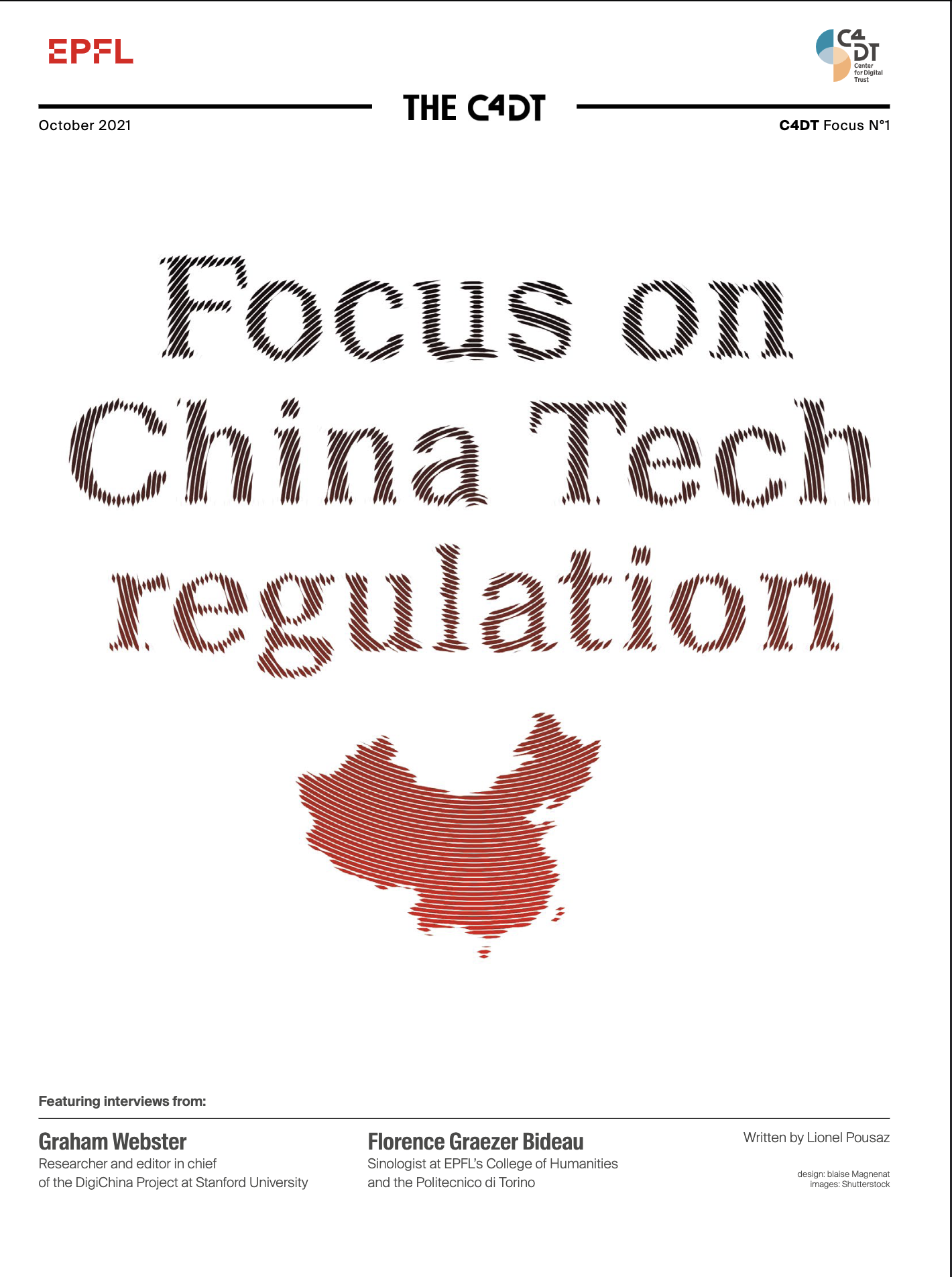
This edition has been written by scientific writer Lionel Pousaz
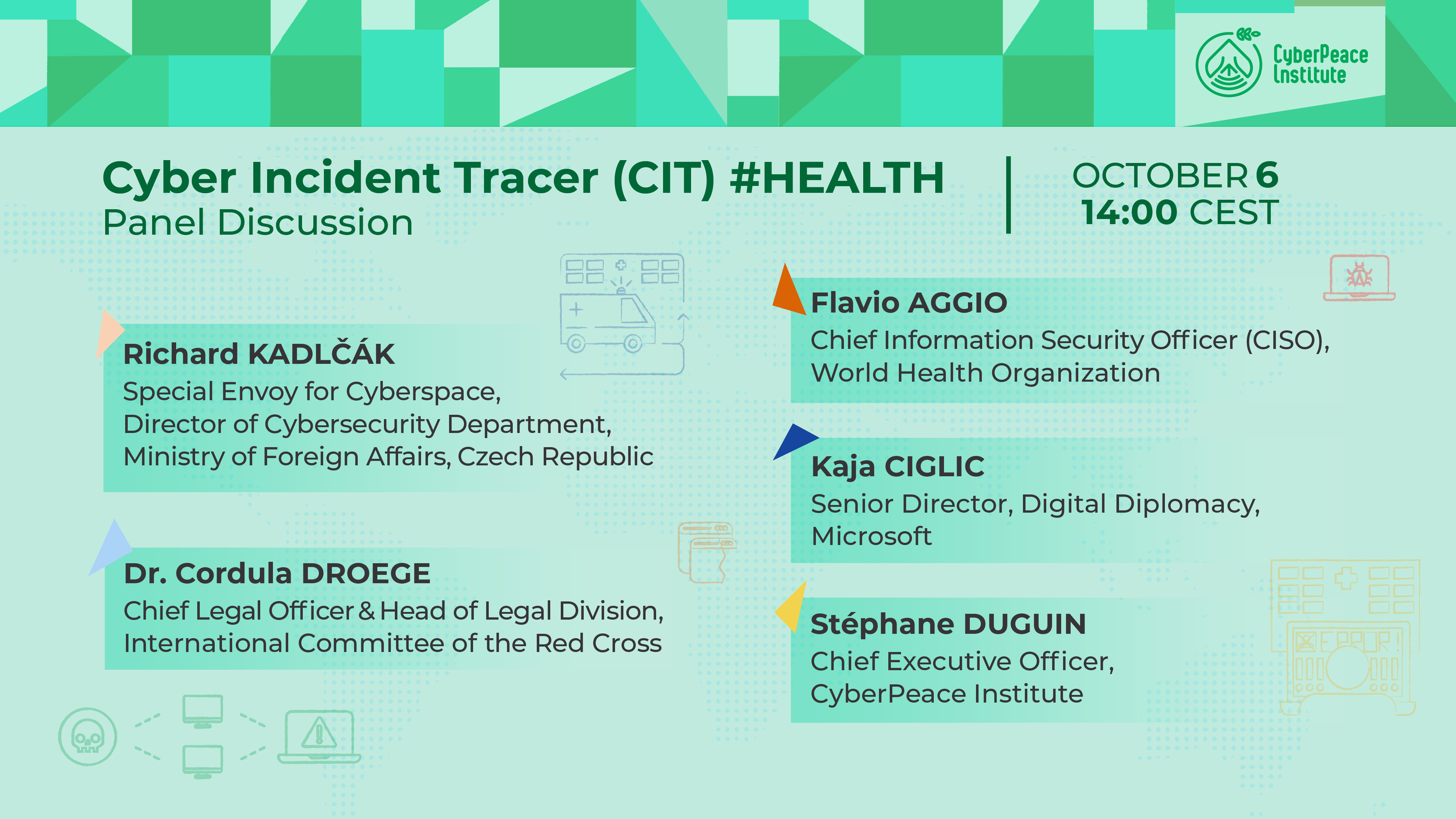
We will discuss how to bridge the gap in the availability of information relating to cyberattacks on the healthcare sector and how evidence-led accountability is an important contribution to reduce cyberattacks on this critical sector. Panelists will focus on how and whether understanding the scale and scope of attacks can improve decision making and operational and diplomatic initiatives to protect the healthcare sector.
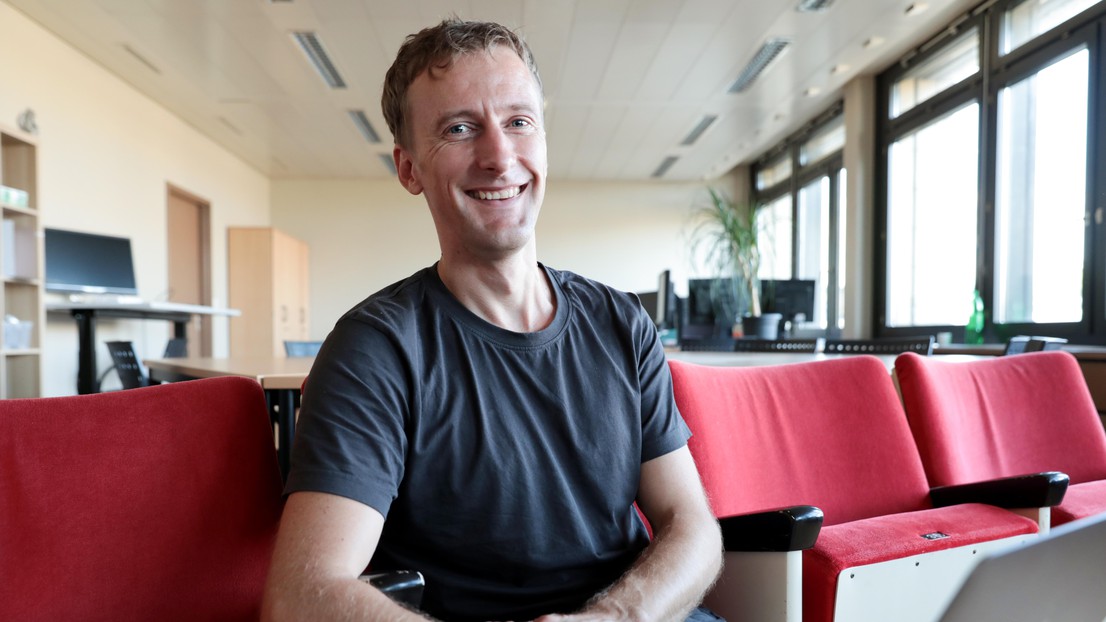
Martin Jaggi, C4DT affiliated Tenure Track Assistant Professor in the School of Computer and Communications Sciences (IC) has won the 2021 Credit Suisse Award for Best Teaching, for introducing two novel, hands-on science challenges into his Machine Learning Course – the largest masters level class on campus.
Armed conflicts, violence and migration are causing large scale separation of family members, dislocation of family links and missing persons. People must receive help to know what happened to reconnect to their loved ones as rapidly as possible. The ICRC and LSIR through its partnership have set themselves a challenge to analyse publicly available data through analytics techniques to identify missing persons that would arguably not have been identified using current, conventional methods. The goal of this project is to facilitate the search for missing individuals by building scalable, accurate systems tailored for that purpose.