Calypso is an auditable data-management framework that allows decentralize sharing and life-cycle management of private data. It is describe in this paper: https://eprint.iacr.org/2018/209.pdf. We use Calypso to store private data on the blockchain. DARCs describe the access to this private data. We use it in an example game of rock-paper-scissors in our example mobile application. (…)
C4DT is working on bringing software from the labs to the real world. As part of this effort, we’re working on implementing use-cases for OmniLedger. OmniLedger is a novel blockchain that offers several new features. For example it works as a decentralised login service. This means that there is no central service deciding on who (…)
Current access rights management systems always depend on a centralized authority that all members must trust. However, for blockchains, this is not a good solution. Blockchains are decentralized and cannot easily use centralized trust systems. We built DARCs, a group-management on steroids that allows decentralized administration and delegation of identities. It is used in the (…)
The 2nd edition of the Geneva Blockchain Congress will be held on Monday the 20th of January at Palexpo, Geneva, and will focus on the following theme:
From Laboratory to Market via Ethics, Regulation and Governance. This will encompass a vast array of topical questions and debates.
For more information, please, click below.
Every week at our engineers-meeting we have a short presentation of _anything_ we found on the internet that is somewhat work-related and that we would like to share with our fellow engineers. As the team-lead, I wanted to do some short team-building exercise, and I thought about the game “The Mind”. It is a collaborative (…)
C4DT is mentioned in RTS French radio show ‘Alter Eco’, broadcasted on Jan 6th in French and entitled “Lausanne, ‘capital mondial de la confiance'”.
Please click below to access the broadcast.
The C4DT Factory works using software produced by the EPFL IC labs. Our focus is on software that increases digital trust in the era of the internet. One area where we see a lack of trust is account management, which includes the following elements: self-sovereign management of the account using the account to login to (…)
The DEDIS lab at EPFL worked on a novel blockchain system called OmniLedger. It uses Calypso to provide decentralized access control including secure storage of data on a blockchain. This combination has the following characteristics: OmniLedger builds on byzcoin, a permissioned, public blockchain which uses little energy. Contrary to other permissioned blockchains, it still allows (…)
For a bit more than three years, DEDIS has been working on a blockchain based on the byzcoin paper. The groundwork has been laid to add client interactions, first as a number of command line interfaces, then a first web-interface, a second interface added by C4DT as a demonstrator, and now, finally, a mobile app (…)
When working on the command line, it is common to build complex commands that connect sub-tasks through the pipe. In those situations, it can be useful to have an idea of the data transferred between two connected processes. For example, what is the throughput? What about the volume of data transferred? Enter pv. You can (…)
Most projects need organization. There exists a bunch out there, from the post-its laying on the desk to a huge kanban spanning the whole chain of supply. With code¸I find using the same layout as the project is pretty practical: when digging deeper inside it, you get more relevant information, tagging these closer to the (…)
Protecting your SME from cyberattacks is often complicated: costs of IT security audits, absent or overly complex standards, lack of internal skills have discouraged more than one company from confronting these risks.
Born from a participative approach, the Label cyber-safe.ch helps SMEs and other small organizations to manage their cyber risks pragmatically. Since December 9, a free tool allows to easily assess the exposure of an SME on the website www.cyber-safe.ch.
Please click below to access the official press release in French.
The Center for Digital Trust is always searching for novel ways to decentralize control of users accounts so we don’t have to rely on a centralized structure that can be abused by administrators. Currently we have three kinds of services that we offer to our partners: A matrix.c4dt.org installation for internal discussions Our demo.c4dt.org demonstrators (…)
The rising importance of data has thrown up new challenges ranging from competition policy to privacy to the geostrategic implications of 5G. The goal of this conference, organized in collaboration with The Graduate Institute in Geneva (IHEID), is to boost understanding of what data is and help to develop mindsets and attitudes that are based on technical and economic realities rather than the myths and shallow discussions that so often appear in popular media. For more information, please click below…
March 19th, 2020, 08:00-18:00 @ The Graduate Institute, Geneva, Maison de la Paix, Auditorium A1.
The Crypto Valley is now connecting Zug with Romandie. The Valley is Switzerland in its integrality, and beyond. To celebrate this major step, the Crypto Valley Association is officially launching its Western Switzerland Chapter on December 02 at EPFL, Lausanne. Join them in order to meet the dynamic local blockchain and crypto community. During the event, a specific focus will be kept on crypto finance, digital assets and blockchain education.
December 2nd, 2019 @ 17:00-19:00, Polydôme EPFL
On January 25-29, 2020 EPFL’s Swiss Tech Center will host the fourth iteration of the Applied Machine Learning Days. The best people in the field will talk about a variety of issues on the application of machine learning and AI – from technical to social to economical. The conference includes a track on AI & trust co-organized by C4DT, which will take place on Tuesday the 28th of January.

A new research program will combine the specialist knowledge of the Swiss Finance Institute @ EPFL with insights from the School’s data scientists and digital trust experts.
The Swiss online bank Swissquote, sponsor of the Chair in Quantitative Finance and founding member of EPFL’s Center for Digital Trust (C4DT), is co-funding a new Finance and Technology Research Program, with Prof. Damir Filipovic, head of the Swiss Finance Institute, serving as its academic director. The news was unveiled at the Swissquote 2019 Conference on Artificial Intelligence in Finance, held on the 8th of November at the SwissTech Convention Center. Read EPFL’s press release by clicking on the following link.
The partner login is a special service where you can find additional documents available only to partners The available slides from the General Assemblies and Advisory Committees: ACM 2022 February GA 2021 November ACM 2020 May ACM 2020 February GA 2019 November ACM 2019 June ACM 2019 February Founding GA 2018 November Founding GA Mural (…)
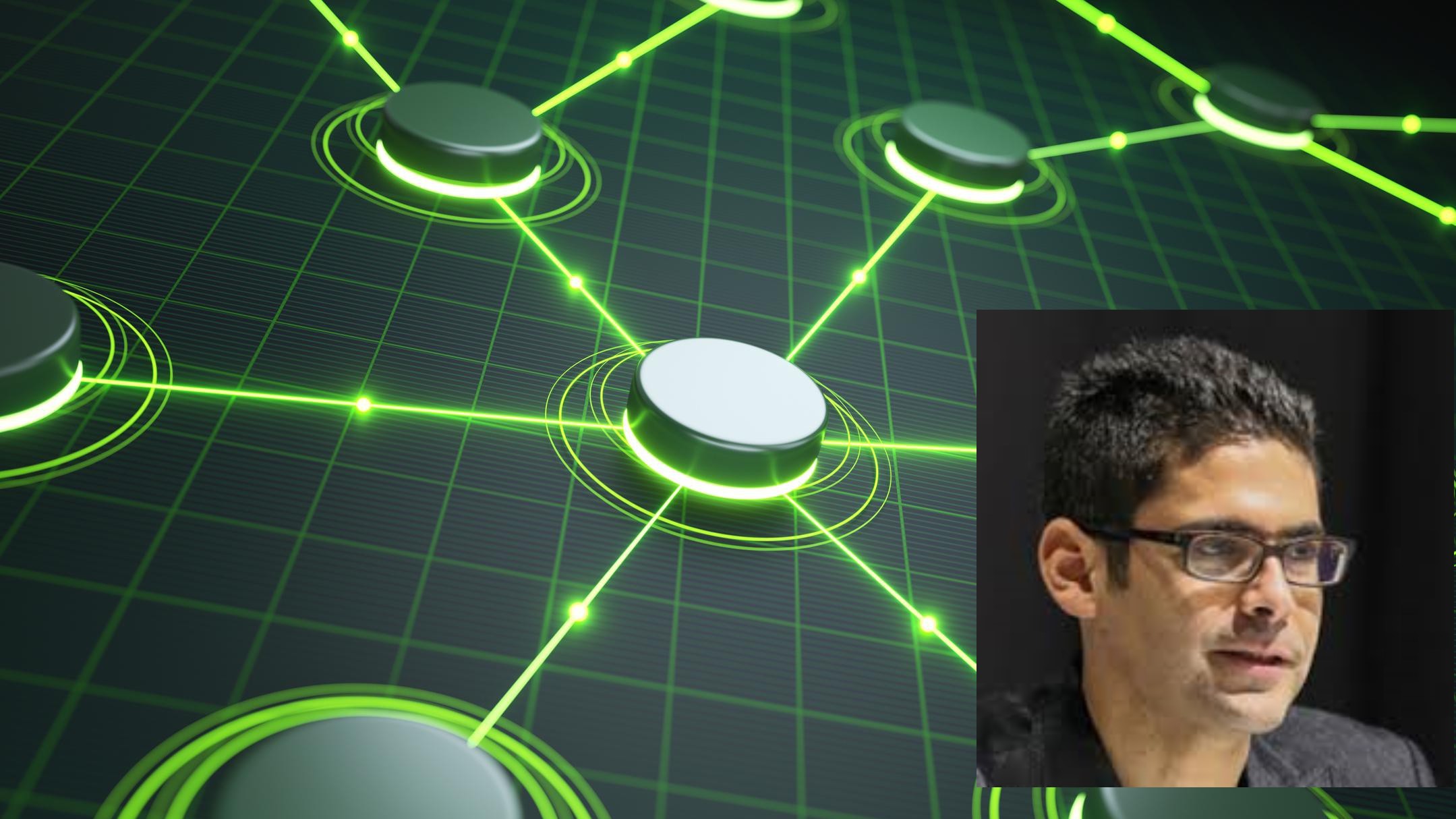
The cryptocurrency Bitcoin is limited by its astronomical electricity consumption and outsized carbon footprint. A nearly zero-energy alternative sounds too good to be true, but as C4DT-affiliated Professor Rachid Guerraoui explains, it all comes down to our understanding of what makes transactions secure. DCL’s new system, dubbed Byzantine Reliable Broadcast, can achieve safe cryptocurrency transactions on a large scale with an energetic cost of virtually zero. Read EPFL’s press release by clicking on the following link.
On Thursday October 3rd the C4DT will kick off the IoT Security workgroup with its launch workshop held at the EPFL. Nine C4DT partner companies will develop an understanding of each other’s challenges and needs in IoT Security and share insights on such projects. Prof. David Atienza and Dr. Amir Aminifar from the C4DT-affiliated Embedded Systems Laboratory (ESL) provide insights into their state-of-the-art research.
Thursday 26 September 2019 saw the launch of the CyberPeace Institute, an independent NGO that will address the growing impact of major cyberattacks, assist vulnerable communities, promote transparency, and advance global discussions on acceptable behavior in cyberspace. EPFL President Martin Vetterli will be sitting on the Executive Board, and the Center for Digital Trust is named as a scientific partner.
The C4DT is looking forward to working with the @cyberpeaceinst led by @DuguinStephane and @MarietjeSchaake and supporting its mission to enhance the stability of #cyberspace. Please click below to access the official announcement.
Facebook’s Libra project continues to fuel the news headlines and stirs passionate discussions, for example, on its technological robustness, its macro-economical and societal impact as well as the FINMA’s regulatory response.
The C4DT organises a panel discussion this topic on Wednesday the 2nd of October from 16h to 18h @ EPFL room BC 420, A networking aperitif until 19h30 will round off the event. Please note that this event is by invitation only.
The Empowerment Foundation is organising an important summit on the 3rd and 4th of October on Freedom in a data driven World. Some of the topics covered during the summit are Cloud Act and its consequence in Switzerland, Privacy with testimonials from one of the protagonists of the Cambridge Analytica scandal, GDPR and Fake News.
October 3rd, 2019, 09-17h @ ECAL, Lausanne
October 4th, 2019, 09-16h @ Centre des congrès le Régent, Crans-Montana
For its 3rd Digital Day, digitalswitzerland organises a debate on gaming, e-commerce and cyber-risques. 4 experts discuss at the Café Saint Pierre in Lausanne the risks and opportunities of our digital society, answer your questions and give some tips for moving safely in the digital world.
September 3, 2019, 17-19h @ Café St. Pierre, Lausanne