The EPFL COVID-19 academic committee has given the green light to twenty research projects directly addressing the COVID-19 crisis. In their research, teams from all the Schools work on priority aspects of the pandemic: preventing or tracking contagion, cure and vaccines, diagnostics and testing, and policy and data. In this workshop we will present a selection of 5 to the C4DT community and discuss potential collaboration.
For more information about this event please click below.
The C4DT organizes a panel discussion on Quantum safety – security against quantum attacks. It aims to establish a common understanding of quantum terminology, to grasp the concrete risks from quantum computing faced by companies, and to raise awareness among leaders to prepare enterprises now for a secure future. Among the panelists are Dr. Tommaso Gagliardoni, Kudelski Security, Dr. Dimitar Jetchev, Inpher, Dr. Grégoire Ribordy, ID Quantique and Dr. Juan Troncoso-Pastoriza, EPFL.
September 16th, 2020, 16:00-19:00 @ EPFL, 1014 Ecublens, Switzerland. Please note that this event is for the C4DT community only. Please contact david.viollier@epfl.ch for more information.

Professor at EPFL, Carmela Troncoso, 37, is in charge of the IT component of the tracing system that Switzerland is preparing. The launch, expected on 11 May, has been delayed by debates at the legislative level. In the meantime, an exclusive meeting with a researcher concerned about health and privacy. For more information please click below
The collaborative development effort, called DP-3T (Decentralized Privacy-Preserving Proximity Tracing), involves researchers from various countries and is led from EPFL by C4DT-affiliated privacy expert Prof. Carmela Troncoso. Its goal is to simplify and accelerate the process of identifying people who have been in contact with an infected person, thus providing a technological foundation to help slow the spread of the SARS-CoV-2 virus. During this public webinar, we will discuss how the application works as well as how to build trust to encourage the population to adopt a technology solution.
May 27th, 10:30 – 12:30, remote.
For more information click below.
Five researchers at EPFL’s Embedded Systems Laboratory (ESL), headed by C4DT-affiliated Prof. David Atienza, have developed an artificial intelligence-based system, called Coughvid, that can listen to your cough and indicate whether you might have COVID-19. Click here to access the app. For more information access EPFL’s announcement below.

Developed in the Laboratory for Data Security (LDS) headed by Professor Jean-Pierre Hubaux at EPFL, in collaboration with the Centre hospitalier universitaire vaudois (CHUV), the MedCo software allows hospitals to make calculations on the data they collectively have at their disposal without transferring or decrypting it. Please click below for more info.

The MedCo system – developed in the Laboratory for Data Security (LDS) of Jean-Pierre Hubaux, academic director of C4DT, in collaboration with the Lausanne University Hospital CHUV – aims to facilitate medical research on pathologies, such as cancer and infectious diseases, by enabling secure computations on decentralized data. The unique software has recently been deployed at three Swiss hospitals, CHUV, HUG and Inselspital in Bern. Please click below for more info.
A consortium of European researchers, including several from EPFL and C4DT, has developed the Pan-European Privacy-Preserving Proximity Tracing (PEPP-PT) application, which should enable everyone to be informed if they have been in contact with a coronavirus carrier while guaranteeing anonymity. The aim is to develop a totally anonymous monitoring and alert protocol based on Bluetooth technology. Please click below to read the article in French.

Coronavirus: What is in store for Switzerland?
Early March during the broadcast 10vor10 on SRF, Marcel Salathé, Professor of Epidemiology at EPFL, talked about measures and scenarios in Switzerland.
Please click below for more info.

What happens after April 19? Epidemiologist Marcel Salathé, professor at EPFL, explains in the Neue Zürcher Zeitung how Switzerland could get out of the lockdown.
Please click below for more information
Debate between Jean-Pierre Hubaux, professor at EPFL, academic director of C4DT and head of the data security laboratory, Antoine Flahault, epidemiologist, director of the Institute of Global Health of the University of Geneva and Aude Marcovitch, RTS journalist.
Jean-Pierre Hubaux, talks about data monitoring in the fight against Covid-19, in the March 25 programme Forum on RTS.
Please click below to access the broadcast.
French-language news paper ‘Le Temps’ interviewed C4DT-affiliated Jacques Fellay, professor in Human Genomics of Infection and Immunity at EPFL, on his opinion regarding rapid progression of the coronavirus in Switzerland.
Read the article in French on ‘www.letemps.ch’ by clicking the following link.
French-language news site ‘RTS info’ asked Marcel Salathé, professor in Digital Epidemiology at EPFL, on his opinion regarding the Swiss authority’s COVID-19 response.
Read the article in French on ‘www.rts.ch’ by clicking the following link.
It is customary for users familiar with a command-line shell or dynamic languages such as Python to work with a REPL, or Read-Eval-Print-Loop. This kind of interface is very powerful for common exploratory tasks: quickly interact with some data or object, prototype an idea, or learn a particular functionality or library. Unfortunately, static languages such (…)
In the wake of the recent Crypto Ag scandal, French-language news paper ’24Heures’ interviewed Jean-Pierre Hubaux, professor at EPFL, academic director of the Center for Digital Trust, on his insights on data protection and on the scandal’s impact on our trust in the digital world.
Read the article in French on www.24heures.ch or by accessing the pdf through the following link.
To ensure good code quality, we are looking this week at some golang (one of the language used for many of our project at C4DT) helping us to do so. Some idea where taken from the Awesome Go List, a good reference for everything related to golang. First, we show some “classic” golang tools used (…)
Using typescript and npm has two big advantages: there are many modules available, and it runs in many environments. Unfortunately this is also one of the biggest challenges. Because you can configure every aspect of the system, you can break it very easily. At C4DT we often use the crypto library, or the crypto-browserify counterpart. (…)
The 3rd edition of the Crypto Valley Conference will be held on On June 11-12 in Rotkreuz, Switzerland, with two days of in-depth discussions on the current state and future of blockchain technology.
More information will follow shortly. To access the event’s website, click below.
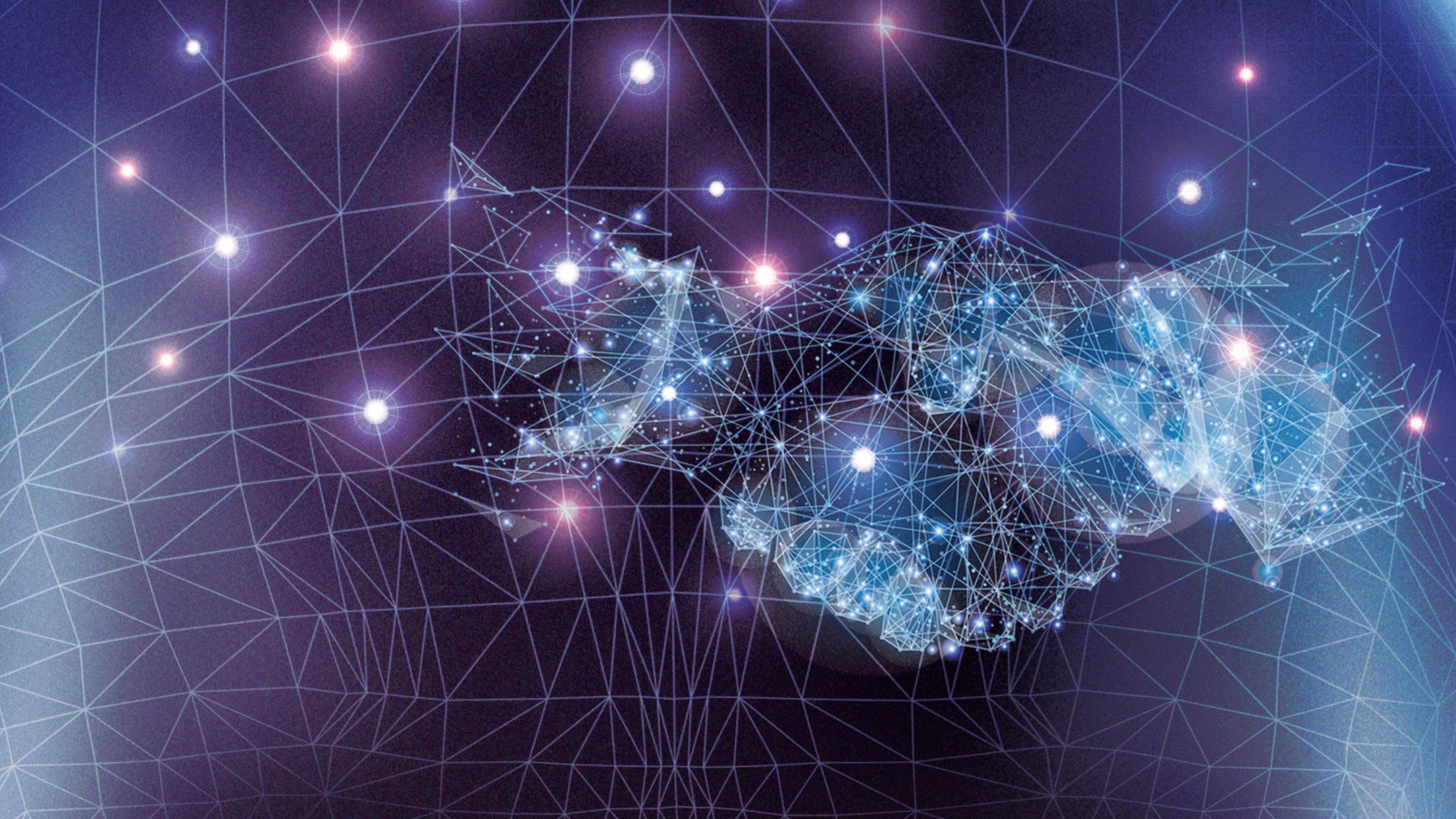
Cyber-threats have been accelerating due to the exponential growth of network connectivity. These new capabilities provide myriad opportunities for security hackers to wreak significant damage for commercial, political, or other gains. To promote research and education in cyber-defence, EPFL, the Swiss Federal Institute of Technology in Lausanne, and the Cyber-Defence (CYD) Campus have jointly launched the “CYD Fellowships” – a talent program for cyber-defence research.
CYD Fellowships are designed to promote new solutions to major challenges in the fields of security and data science by bringing together basic and applied research and supported by armasuisse Science and Technology.
Please click below for the official EPFL announcement.
Want to automate pretty much every aspect of a deployed application lifespan? Having issue with reliability using docker-compose? Doesn’t want to care/handle how to expose this application to the outside? Want to have a reproducible infrastructure of containers deployed in a fast and resilient manner? Then Kubernetes is for you. In a word, it’s a (…)
In a systems infrastructure, it is common that a single physical hosts presents many different services to the world. For example, one can have https://app1.my.domain/ and https://app2.my.domain/ point to the same host, whereas the actual services inside the organization reside on different physical or virtual machines. A typical way to handle this is to use (…)
From an engineering point of view, quantum computers are very interesting beasts. It’s something new, shiny, you don’t understand it, but it seems to be the future. So you must go there! This is a collection of links that I found very helpful in understanding how quantum computers work and what they can do. First (…)
Every Monday the C4DT Factory team comes together for a meet’n share. Somebody from the team presents something he saw on the internet that is somewhat related to the work we’re doing. This can be technical, organisational, recreational (we didn’t have the “best cat pics” yet). Here is a list of the subjects we had (…)
Initiatives against cybercrime, online harassment or spying are increasing at an impressive rate. Switzerland wants to position itself as a world center of excellence. French-language news paper ‘Le Temps’ asked Olivier Crochat, executive director of the Center for Digital Trust, about the center’s focus.
Read the article in French on www.letemps.ch or by accessing the pdf through the following link.