The variety of dependencies in modern IT systems provides several advantages, but also has a strong impact on the security and resilience of these systems. A number of recent incidents, such as the “SolarWinds attack” on US governmental agencies, underline the difficulty of securing systems that are composed of various apparently independent components.
How aware are organisations of their IT dependencies? How do they manage them? How are dependencies taken into account in the decision process? The goal of this workshop is to gather experiences, and to present approaches that tackle these dependency issues, from theoretical and practical points of view.
This event is organized by the Swiss Support Center for Cybersecurity (SSCC), in collaboration with the Center for Digital Trust (C4DT) at EPFL and the Zurich Information Security Center (ZISC) at ETHZ.
For more information click below.
Today, it’s often more cost-effective to host services in the cloud instead of in its own premises. But how protected is our sensitive data in the cloud? We readily encrypt data in storage and protect it while in transit. But what about when data is “in use”? It is a legitimate concern in increasingly cloud-dominated infrastructures. Moreover, how to make sense of the different laws governing the sensitive data?
During this week we will explore how privacy-enhancing computation technologies complement a zero-trust strategy by addressing the vulnerability of data in use in the cloud. We will also discuss the legal framework which is required to balance economical interest of companies with the individual’s data privacy concerns.
For more information click below

The certificate linked to the virus will not be available before June in Switzerland. Until then, here are twelve answers linked to questions of security, data and accessibility concerning what some call the “Immunity Passport”. In particular, Jean-Pierre Hubaux, C4DT Academic Director, provides insights on the questions linked to data.
There is much debate about the use of digital immunity passports as a response to the COVID-19 pandemic. Such digital tools to certify immunity could help spur economic recovery, but raise ethical and privacy concerns. How to build trust in such a solution? What elements make them interoperable among countries? How is people’s data related to their immunity status governed?
A panel of prominent specialists will discuss these and other questions from 4 different angles – ethical, business, political/governance and scientific – during a two-hour moderated discussion.
For more information click below.
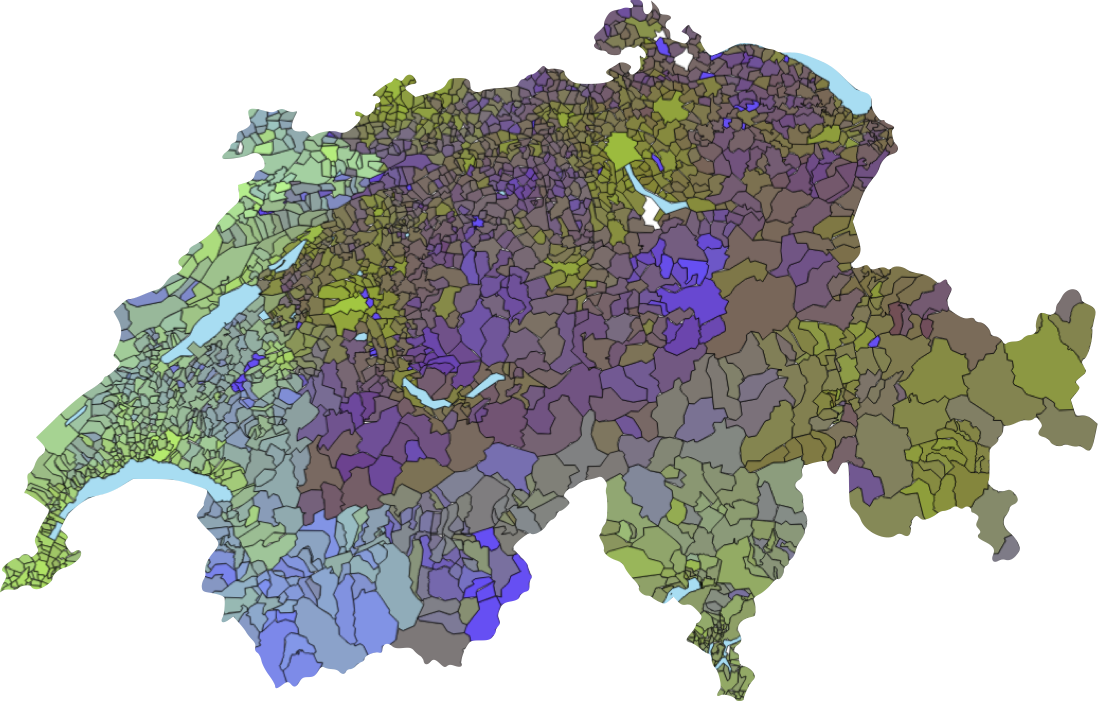
On the 7th of March, the Swiss population voted on a ban for full face coverings, the e-ID Act, and an economic partnership agreement with Indonesia. As with all Swiss referendums since 2019, the EPFL election prediction tool Predikon generated real-time predictions for the vote outcomes.

Digital activities represent around 4-5% of CO2 emissions, estimate several studies. And cryptocurrencies, like Bitcoin, are amongst the most energy consuming activities: far ahead of streaming and email exchanges. The podcast “Le Point J” tries to understand why.
In communication systems, there are many tasks, like modulation recognition, for which Deep Neural Networks (DNNs) have obtained promising performance. However, these models have been shown to be susceptible to adversarial perturbations, namely imperceptible additive noise crafted to induce misclassification. This raises questions about the security but also the general trust in model predictions. In this project, we propose to use adversarial training, which consists of fine-tuning the model with adversarial perturbations, to increase the robustness of automatic modulation recognition (AMC) models. We show that current state-of-the-art models benefit from adversarial training, which mitigates the robustness issues for some families of modulations. We use adversarial perturbations to visualize the features learned, and we found that in robust models the signal symbols are shifted towards the nearest classes in constellation space, like maximum likelihood methods. This confirms that robust models not only are more secure, but also more interpretable, building their decisions on signal statistics that are relevant to modulation recognition.
Cyber security information is often extremely sensitive and confidential, it introduces a tradeoff between the benefits of improved threat-response capabilities and the drawbacks of disclosing national-security-related information to foreign agencies or institutions. This results in the retention of valuable information (a.k.a. as the free-rider problem), which considerably limits the efficacy of data sharing. The purpose of this project is to resolve the cybersecurity information-sharing tradeoff by enabling more accurate insights on larger amounts of more relevant collective threat-intelligence data.
This project will have the benefit of enabling institutions to build better models by securely collaborating with valuable sensitive data that is not normally shared. This will expand the range of available intelligence, thus leading to new and better threat analyses and predictions.

The ease of creating fake virtual identities plays an important role in shaping the way information—and misinformation—circulates online. Social media platforms are increasingly prominent in shaping public debates, and the tension between online anonymity and accountability is a source of growing societal risks. This article outlines one approach to resolving this tension, with “pseudonym parties” that focus on proof of personhood rather than identity. Pseudonym parties are a low-tech approach to important digital challenges, linking online activity to anonymous digital tokens that are obtained by being physically present at an appointed time and place.
The implementation and monitoring of the Sustainable Development Goals (SDGs) has shown the critical role of data and technology to advance sustainable and inclusive development. The COVID-19 crisis has highlighted the importance of leveraging data and digital technologies to ensure a rapid, agile, and effective response to both the pandemic as it unfolds and the economic recovery in its aftermath. Data plays a catalytic role in informing targeted decision-making at the national and supranational levels while technology can be harnessed to realize new and innovative ways to implement tangible solutions on the ground.
Under the overarching theme of harnessing data and technology for development, this cross-sectorial dialogue will feature two complementary discussions. The first panel will focus on data for development, presenting the World Bank SDG Atlas and its innovative data visualizations, and discussing the role of data in leading a resilient recovery and achieving the SDGs. The second panel will focus on technology for development, presenting EPFL’s Tech4Dev initiative and showcasing best practices in technology transfer that can be adopted by multiple stakeholders in international development.
This Monday I presented the following article. It discusses blockchains shortcomings. Even if it has been written in 2018, it is still very up-to-date… What follows here is a very opinionated piece. As such it reflects the journey I did in blockchains over the past 6 years. And I’m sure I missed out a lot (…)
Concurrent programming is one the oldest and hardest issues in the Computer Science Book. For years, we have been using locks, big threads sharing the minimum, using optimistic reasoning for “how data will be updated”. And we are still stuck with the same issues of some part of the code “failing” to use the updated (…)
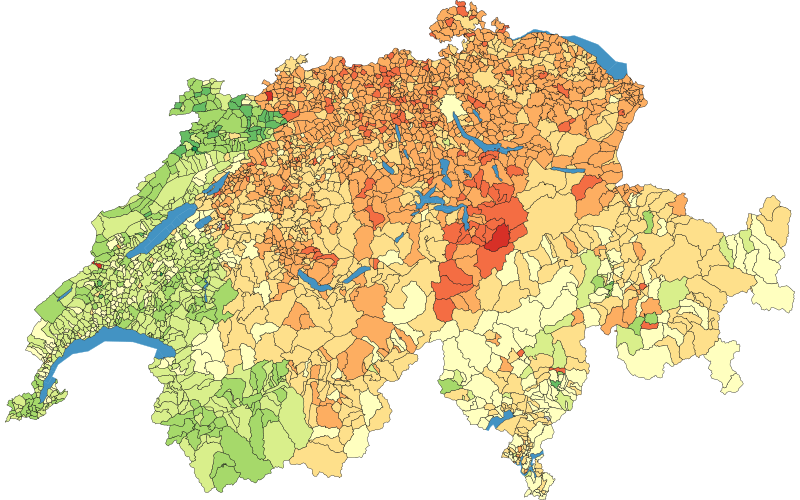
On March 7, the next Swiss referendum vote will be held, with votes on a ban for full face coverings, the e-ID Act, and the economic partnership agreement with Indonesia. As this national vote approaches, the EPFL election prediction tool, Predikon, is rolling out some improvements with new features.
We’ve been looking at the very nice https://gather.town and played around with it. Instead of having a fixed view of all participants, you can walk around and ‘meet’ different persons in gather.town. You can edit the space your liking. It looks very much like a very old-school Zelda: What I liked a lot about it (…)
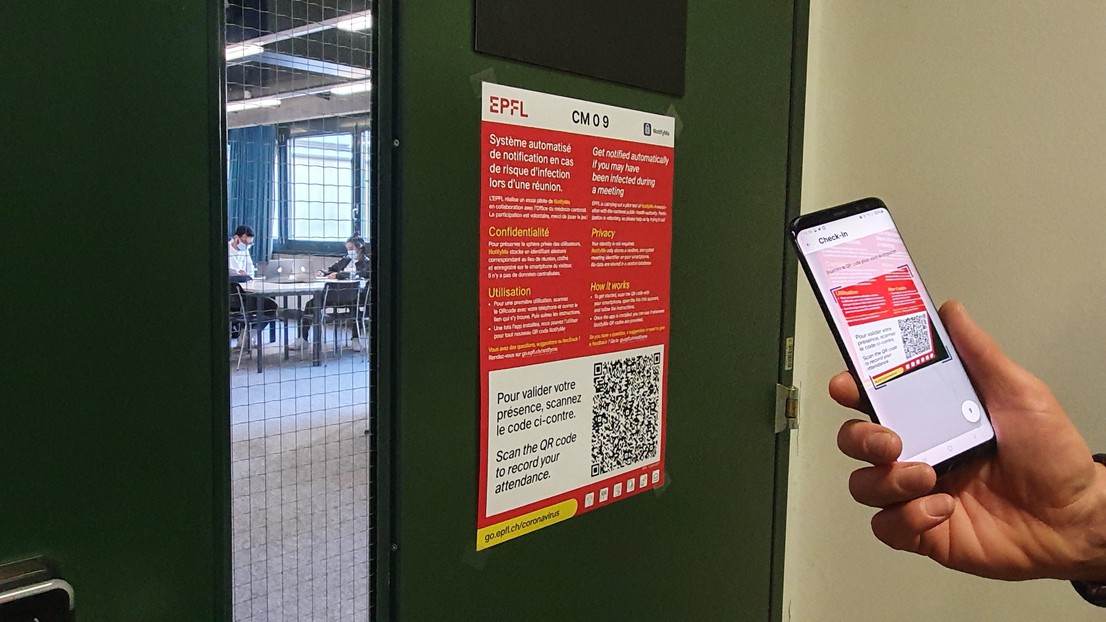
NotifyMe is a new app that alerts people who attended an event where there was a risk of COVID-19 infection. The app, using technology developed in part at EPFL, in no way compromises users’ personal data. NotifyMe works well in conjunction with SwissCovid and is currently being pilot-tested at EPFL.
The management of IT infrastructure is a constantly evolving topic. A very interesting concept that emerged in the last decades is the idea of infrastructure as code: instead of configuring servers in an artisanal fashion, the process is formalized into definition files, which are then automatically “executed”. There are multiple advantages, notably: The files always (…)
While the SwissCovid proximity tracing app was designed as decentralized and privacy-preserving, adoption rates have been low, and non-users have cited privacy and data protection as the top reason for not adopting. Similar results have been seen in other countries. Given the potential benefits of such an app, and users willingness to use apps with less privacy and arguably less social benefits, this suggests a need for a better understanding of privacy along with a greater focus on generating digital trust in society.
IHEID’s Centre for Trade and Economic Integration and the Global Health Centre invite you to join them for a panel discussion on the privacy features of the proximity tracing apps, the implications of such tech for global health, and general privacy and online trust, with a view to the lessons learned, and what can be done better.
For more information please click below.
Tuesday, February 16th, 15h00-16h00 (CET), online

EPFL Professor Matthias Grossglauser has been awarded the grade of Institute of Electrical and Electronics Engineers Fellow, a notable recognition given to less than 0.1% of voting members annually.
Please click below for more info.
On the 7th of March the Swiss population will vote on a law the Federal Council and the Parliament have prepared establishing an identification system recognized by the Confederation: the e-ID. Opportunities that arise through digital identification will not only depend on a country’s implementation but also on the trust which its citizens have in its government and institutions. During the week of the 8th to 12th of March, which follows the referendum, we would like to
– discuss the eID law and compare it to the one already implemented by other countries,
– discuss the population’s trust and willingness to adopt a national eID,
– get the perspective of a Swiss Consumer group and learn about the tech implementation and perspective of a digital ID provider,
– hear researchers’ point of view on the implementation challenges, possible solutions and research trends.
Finally, we will try to identify and frame a challenge / use case on which the eID workgroup can solve with the support of research.
Please note that this is a C4DT community event only.
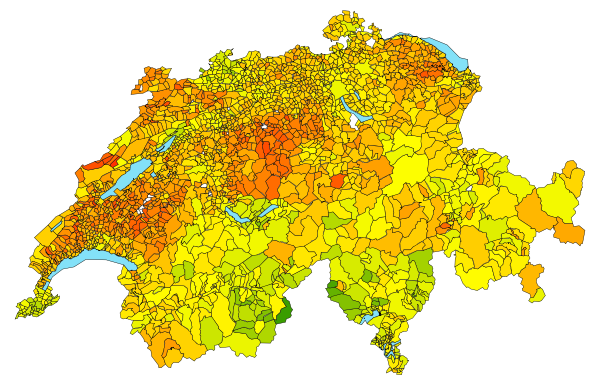
While votes seem to yield increasingly surprising results, such as the election of Donald Trump in 2016 or the Brexit vote in the UK defying pre-vote polls and initial vote counting predictions, Swiss vote results are swiftly being predicted by Predikon. We will follow the evolution of the project until the next vote, which will take place on March 7th. An article every month will enable you to observe the evolution of the project, (almost) live, accompanying Victor Kristof in the improvement of Predikon.
With the massive use of Fake News and the Cambridge Analytica scandal, the general public is aware that AI can harm democratic processes. But on its bright side, can machine learning help us to better understand and improve democracy?
Applied Machine Learning Days at EPFL in 2021 will consists of monthly thematically focussed conferences on machine learning and artificial intelligence with top speakers from around the world. The AI & Democracy track explores the challenges and opportunities that lie at the intersection of politics, law, and machine learning – beyond Fake News and Cambridge Analytica. Open Government Initiatives have opened access to vast amounts of data that political scientists, lawmakers, legal experts, journalists, and data scientists exploit to gain insights into political and legal processes.
For more information please click below.
Monday, January 25th 2021, 09h00-17h00, online
During this event the 4 associate partners, who joined the C4DT as part of the C4DT start-up program, will present themselves to the C4DT community. For two years Regdata, strong.network, Taurus and Xorlab will complement the already diverse group of partner companies through their start-up perspective and collaborate and share insights on trust-building technologies. Virtually meet them, learn about their activities and ask questions and discuss with your start-up(s) of interest in 4 concurrent break-out sessions.
This is a C4DT community event only.
This article looks into the optimizations of the golang compiler with regard to different usage of structs. It answers the following questions: Does it avoid unnecessary structure copies? Does it inline where necessary? To answer theses questions, I wrote a small example and decompiled it to see how well it behaves. For all the examples, (…)
We are excited to announce the launch of the C4DT start-up program. 4 start-ups have already been selected to join the C4DT community, consisting of 13 partners and 34 EPFL laboratories, to collaborate and share insights on trust-building technologies. For two years Regdata, strong.network, Taurus and Xorlab will complement the already diverse group of partner companies through their start-up perspectives. Their agility and innovation has permitted these start-ups to differentiate themselves in their respective fields. Please click below for more information.
We are looking forward to an exciting and fruitful collaboration.